No products in the cart.

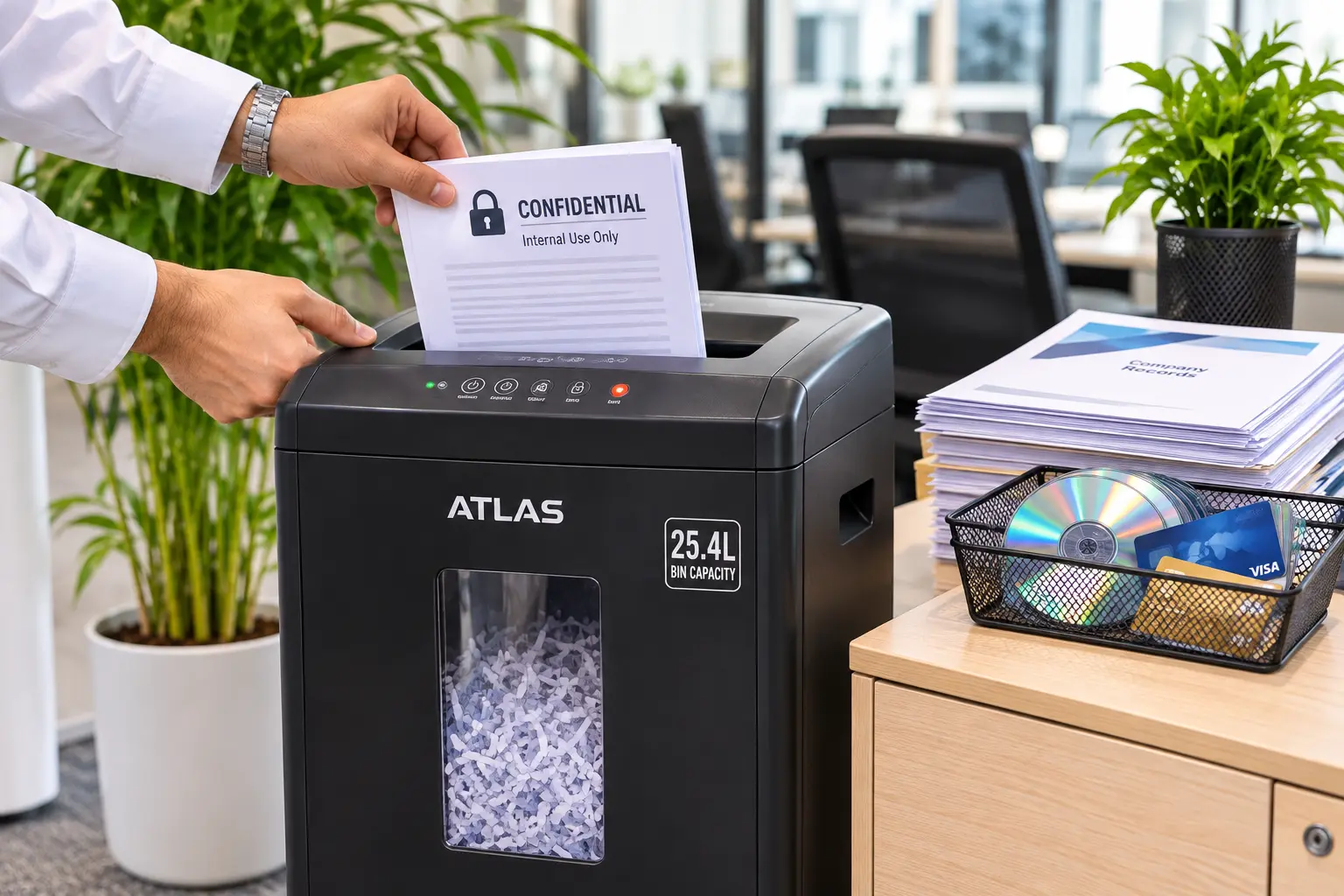
Quick Summary: Learning how to choose a paper shredder for a Saudi office depends on four measurable specifications: DIN 66399 security level, sheet pass capacity, motor duty cycle,

No products in the cart.
Quick Summary:
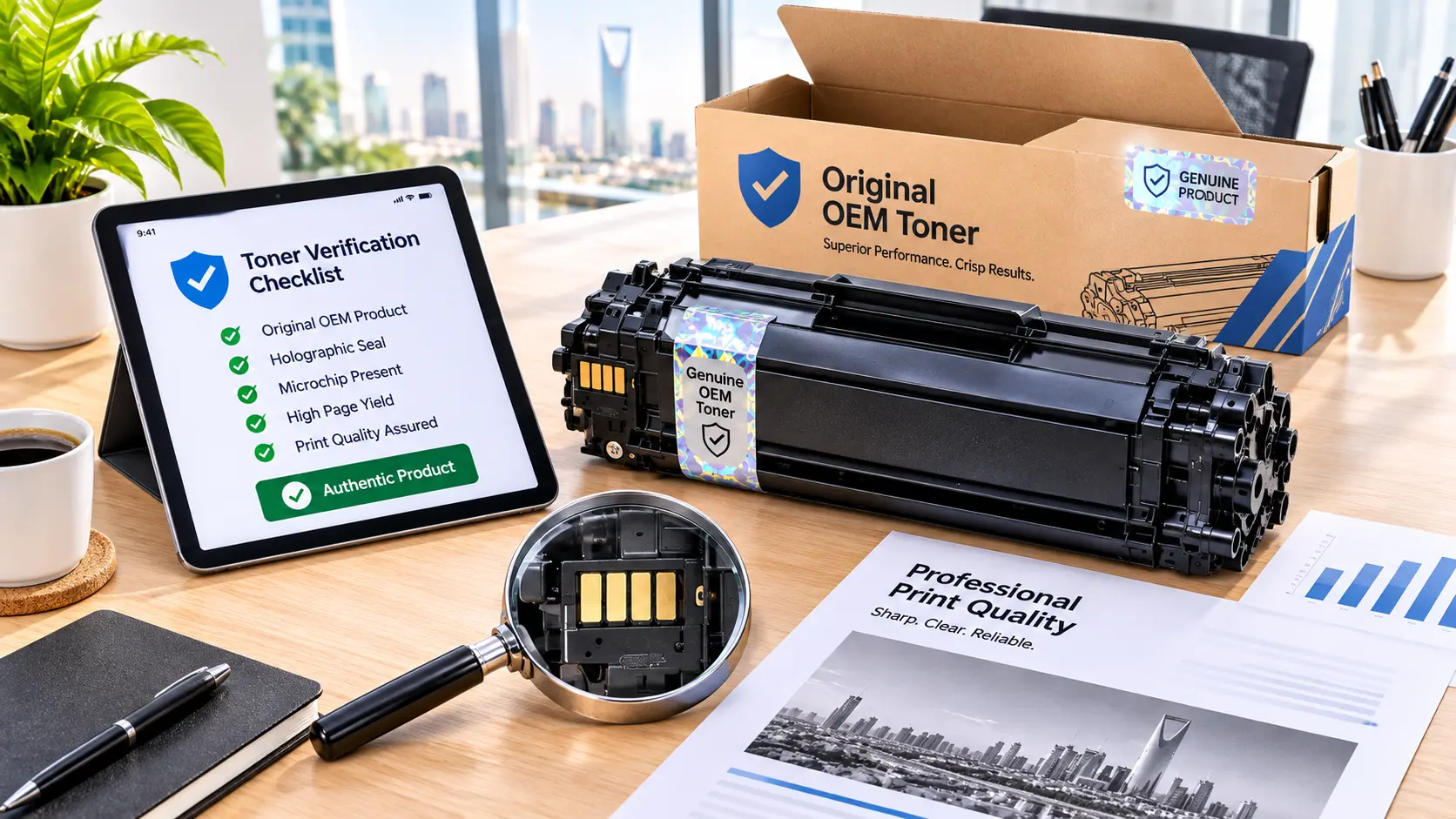
Comparing original vs compatible toner comes down to four measurable factors: verifiable supply origin, serialized batch traceability, standardized ISO/IEC page yield, and clear hardware support terms. Disclosure: Supplies Hub exclusively markets and distributes 100% original OEM toner cartridges across Saudi Arabia, and this guide compares both options objectively so your procurement team can verify any vendor.
A sudden “Non-Genuine Supply” error or streaky pages right before a Riyadh tender submission brings an entire office to a halt. When evaluating original vs compatible toner, most procurement teams only look at the label on the box rather than the engineering and supply chain behind it. In Saudi Arabia’s demanding corporate environment, unverified cartridges frequently trigger printer firmware lockouts, fuser roller damage, and disputed service contracts. This buyer’s checklist breaks down OEM toner vs compatible alternatives across supply origin, traceability, tested page yield, and support terms giving you a clear, repeatable audit framework before your next order. If your team is still confirming which print technology fits each department, review our office admin guide on ink vs. toner first.
Supply origin determines the chemical formulation of the toner powder, the precision of the internal gears, and whether the cartridge carries verifiable manufacturer accountability.
When buyers compare OEM toner vs compatible cartridges, they are actually looking at three distinct manufacturing categories rather than two:
In the KSA market, supply origin also protects your business against counterfeit cartridges. Unscrupulous brokers occasionally pack low grade clones inside replicated brand boxes. Sourcing directly through Supplies Hub’s official partners guarantees an unbroken chain of custody from the manufacturer’s factory to your office storage room.
Genuine toner cartridges provide cryptographic batch authentication, standardized ISO/IEC page yields, and unified warranty coverage, whereas compatible alternatives vary widely in testing and service liability.
To evaluate original vs compatible toner fairly without relying on marketing claims, compare how each category performs across six operational benchmarks:
| Evaluation Factor | Original OEM Toner | ISO-Certified Remanufactured | Unverified New-Build Compatible |
| Supply Origin | Direct from printer brand via authorized distributors | Rebuilt spent OEM shell from a certified recycler | Third party clone factory using reverse-engineered molds |
| Batch Traceability | Serialized QR codes, tamper evident holograms, SASO/SABER logs | Supplier lot numbers and internal facility batch tags | Minimal batch tracking; often lacks verifiable origin logs |
| Tested Page Yield | Verified under ISO/IEC 19752 (mono) or ISO/IEC 19798 (color) | Tested under ASTM F1856 / STMC standards by top vendors | Internal factory estimates; frequently inconsistent in practice |
| Toner Chemistry | Uniform polymerized particles matched to exact fuser heat | Reformulated powder; particle size varies by batch | Pulverized irregular particles requiring higher fusing heat |
| Firmware & Chip Sync | Native encrypted chip; unaffected by printer security updates | Reused or reset OEM chip; occasional update friction | Cloned microchip; high risk of post-update lockout |
| Support & Warranty | Covered by OEM consumable + hardware warranty terms | Vendor replacement warranty; split hardware liability | Limited return window; user bears fuser/drum repair risk |
Many procurement managers track toner cost per page on paper, yet miss how page yield efficiency actually behaves inside a working machine. Standardized ISO/IEC 19752 and ISO/IEC 19798 benchmarks measure usable output at 5% page coverage meaning a cartridge that leaves grey background shading or forces frequent reprints delivers far fewer usable documents than its box claims.
“Evaluating toner cost per page on paper means nothing if your true yield drops by thirty percent due to background fogging, dense waste hopper buildup, and reprinted client proposals. Standardized ISO/IEC testing exists so procurement teams measure actual usable pages, not just the weight of powder inside the shell.”— Print Fleet & Consumables Operations Lead, Supplies Hub
Tracking these operational metrics alongside vendor defect rates becomes much easier when your team applies structured procurement KPIs and supplier scorecards across quarterly consumable reviews.
A structured pre-purchase audit verifies exact hardware SKUs, tamper-evident authentication seals, ISO yield certificates, and written hardware damage liability before a single box enters your warehouse.
Use this 10-point checklist to vet any supplier or cartridge shipment in Saudi Arabia:
If your organization runs leased or contracted printers, cross check these ten points against your Managed Print Services SLA checklist so third-party consumables never void your service agreement.
The primary compatible toner risks are premature fuser roller wear, internal toner powder leakage, sudden firmware lockouts, and split accountability when hardware fails.
While a low-grade compatible cartridge may print acceptably on day one, cumulative mechanical issues often emerge halfway through the cartridge’s duty cycle:
“The biggest hidden liability in mixed-supply fleets isn’t a single bad print, it’s ambiguous service accountability. When a fuser fails prematurely and both original and third-party cartridges have cycled through the machine, the hardware service provider and the consumable vendor routinely point fingers at each other while your department sits offline.”— Senior Office Equipment Technician, Riyadh
Managing these wear factors is especially critical when balancing device workloads, something our guides on right-sizing how many printers your office actually needs and selecting eco-friendly office printers in KSA cover in detail.
Choose genuine toner cartridges for active warranty fleets, high volume enterprise printers, and client facing or archival documents; consider vetted compatible units only for legacy, out of warranty machines with low print criticality.
Use this practical decision framework to align each printer in your office with the right supply tier:
Standardizing on verified OEM supplies early is particularly effective when setting up a new office in Riyadh, consolidating multi branch replenishment through managed procurement services for corporate offices, or structuring predictable replenishment cycles with a KSA SME monthly office supplies planning guide.
Choosing between original vs compatible toner becomes straightforward once you audit supply origin, batch traceability, ISO/IEC tested page yield, and written warranty protection rather than judging a cartridge by its box alone.
What does your current print fleet look like? Share your printer models, approximate monthly print volume, primary document types (monochrome contracts vs. high coverage color graphics), and whether your machines are under active warranty. Our team at Supplies Hub will review your setup and recommend the exact verified SKUs from our original toner catalog, backed by our official partners and Supplies Hub warranty policy.

SEO & Content Marketing Specialist focused on building search-driven brands through strategic content, organic growth, and audience-first storytelling. Skilled in modern SEO, content strategy, and creating scalable digital experiences.
SEO & Content Marketing Specialist focused on building search-driven brands through strategic content, organic growth, and audience-first storytelling. Skilled in modern SEO, content strategy, and creating scalable digital experiences.
Related Blogs
Quick Summary: Learning how to choose a paper shredder for a Saudi office depends on four measurable specifications: DIN 66399 security level, sheet pass capacity, motor duty cycle,
Quick Summary: Comparing original vs compatible toner comes down to four measurable factors: verifiable supply origin, serialized batch traceability, standardized ISO/IEC page yield, and clear hardware support terms.
Quick Summary: Choosing between 70 vs 80 gsm paper depends on document readability, printer feed limits, and double sided ink coverage rather than assuming heavier paper solves every