
No products in the cart.


Every growing business hits a predictable operational bottleneck. As headcounts expand and branch offices multiply, purchasing essential indirect goods from office machines, networking hardware, and ergonomic furniture to

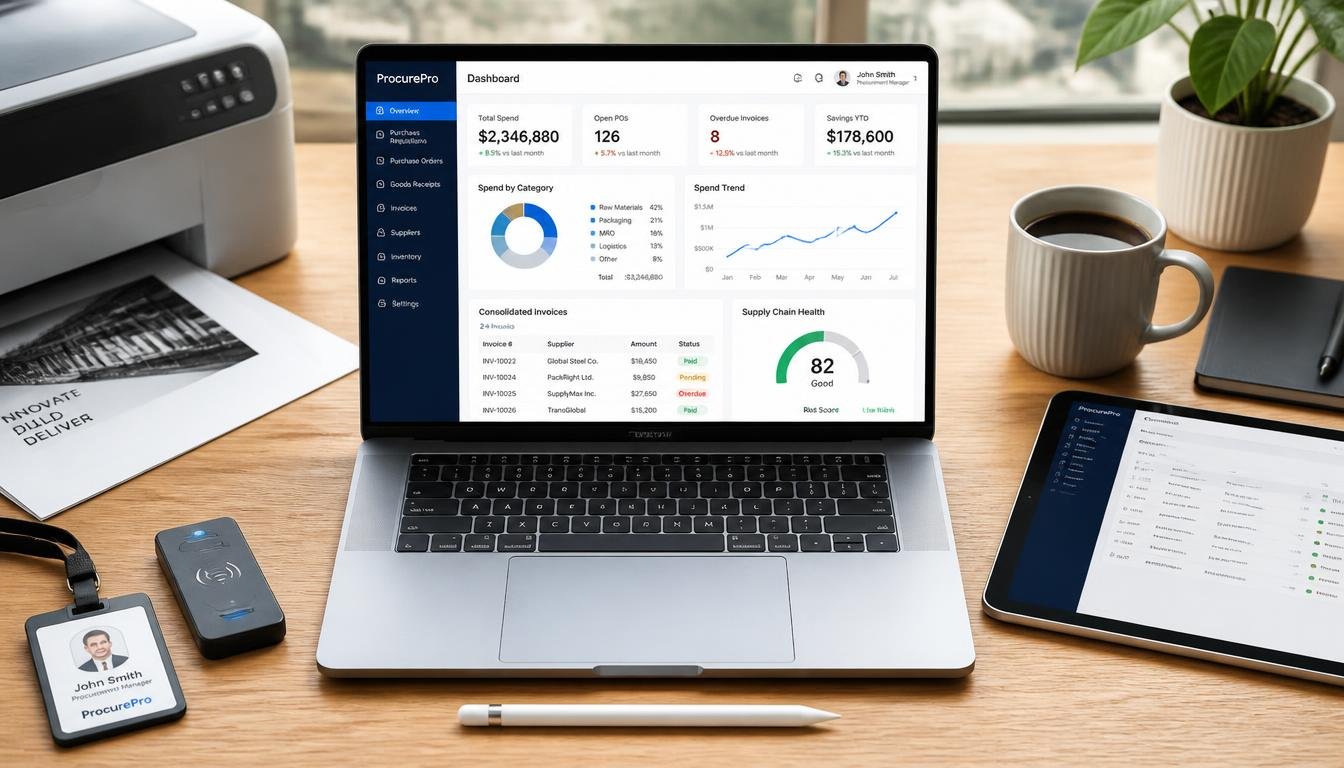
Every growing organization eventually hits a purchasing crossroad: should you recruit an internal buying department or partner with an external sourcing provider? As supply chains face rapid economic shifts, business leaders can no longer treat buying decisions as standard clerical tasks. Managing purchases through fragmented spreadsheets and scattered local vendors drains working capital and stalls operations. Choosing between in-house and outsourced procurement is a foundational business decision that shapes your budget, overhead, and organizational agility.
Companies are taking a hard look at how they spend money because traditional purchasing models are breaking under modern business demands. Managing supply chains has grown far more complex than simply emailing a quote request and cutting a check.
First, the administrative drag of handling dozens of unvetted vendors consumes valuable time. Sourcing everyday office assets, IT workstations, and workplace infrastructure across multiple regional suppliers creates scattered purchase orders, duplicate delivery fees, and billing discrepancies.
Second, regulatory requirements have intensified across fast-growing commercial markets like Saudi Arabia. Under the Kingdom’s Vision 2030 initiatives, organizations must navigate stringent compliance standards, including Phase 2 integration of ZATCA e-invoicing. Dealing with small, informal suppliers who issue non-compliant tax invoices introduces severe audit risks and financial penalties.
Finally, talent acquisition costs have soared. Building an in-house procurement team requires competitive executive compensation, technical category training, and specialized recruitment to meet localization and Saudization benchmarks.
“Modern procurement is no longer about strong-arming suppliers for pennies on commodity items. It is about eliminating operational friction, mitigating regulatory exposure, and safeguarding EBITDA through agile sourcing channels.”
— Eng. Tariq Al-Husseini, Regional Supply Chain & Operations Director
Rather than asking whether purchasing should happen, forward-thinking CFOs and operations managers are re-examining who handles it and where operational value is actually created.
An in-house procurement team represents a major, recurring fixed overhead. Evaluating internal purchasing requires examining the complete Total Cost of Ownership (TCO), not just base salaries.
Total In-House Procurement Cost = Direct Payroll & Benefits + Software Licensing + Administrative Processing Overhead + Carrying Cost of Vendor InefficienciesRunning an internal department requires several distinct roles: a Procurement Manager, Sourcing Specialists, and Accounts Payable Clerks. Beyond monthly salaries, companies bear employment taxes, mandatory health coverage, annual bonuses, visa allocations, and workspace provisions.
A modern purchasing team cannot operate efficiently on basic spreadsheets. Teams need dedicated licenses for Enterprise Resource Planning (ERP) systems, supplier relationship management (SRM) portals, spend analytics software, and digital contract repositories. These enterprise software seats often cost thousands of dollars per user annually in subscription and maintenance fees.
Every internal purchase order (PO) carries an administrative transaction cost. Data from the Center for Advanced Procurement Strategy (CAPS) reveals that processing a single standard purchase order through an in-house team costs between 70and70and120 (SAR 260 to SAR 450) when factoring in:
Internal procurement teams naturally focus on primary commercial supplies. As a result, indirect operational expenses—such as IT hardware, breakroom goods, facility safety, and office equipment often receive fragmented attention. This gap leads to unmonitored “maverick spend,” where departmental managers buy items off-contract at retail markups.
Outsourced procurement, often structured as procurement outsourcing services, involves delegating specific sourcing processes, vendor negotiations, and catalog management to specialized external partners.
External procurement delivers the highest return on investment under specific operational conditions:
When expanding into new regional markets, opening commercial offices, or executing time-sensitive projects, you cannot afford a six-month hiring cycle for procurement staff. An established external provider delivers instant supply network access and established supplier catalogs on day one.
In most businesses, the 80/20 rule governs expenditure: 80% of total spend goes to a handful of primary operational partners, while the remaining 20%—the “tail spend”—involves hundreds of minor, transactional purchases. Outsourcing this fragmented tail spend frees internal teams to focus on strategic, revenue-generating contracts.
A mid-sized enterprise purchasing fifty laptops or thirty office workstations lacks the volume leverage to command Tier-1 direct manufacturer pricing. In contrast, specialized sourcing hubs pool demand across hundreds of commercial clients, passing down institutional volume discounts that individual businesses cannot achieve alone.
Reviewing the fundamental benefits of outsourcing procurement reveals that businesses can lower indirect category costs by 12% to 22% simply through aggregated purchasing networks.
While third-party sourcing eliminates payroll overhead and scales efficiently, it is not without trade-offs. Understanding these trade-offs helps you protect your operational interests:
When an intermediary manages all vendor communications, your business loses direct contact with underlying manufacturers. If your business model relies on highly custom design engineering or specialized supply arrangements, an external partner may slow communications during sudden design changes.
External sourcing providers manage transactions through their own internal systems. When an advisory engagement wraps up, detailed supplier performance notes, pricing histories, and negotiation playbooks often stay with the agency. To prevent this, always ensure your service agreements grant you complete data ownership and regular spend reports.
An external broker working on pure commissions may prioritize standard vendor turnaround times rather than handling your internal emergency orders. For mission-critical purchases, standard external service level agreements (SLAs) can occasionally bottleneck day-to-day operations.
Evaluating the two models requires balancing cost flexibility against operational control:
| Sourcing Dimension | Dedicated In-House Procurement | Full Third-Party Outsourcing | Hybrid Model with Supplies Hub |
|---|---|---|---|
| Financial Commitment | High fixed overhead (salaries, benefits, software) | Variable fee or percentage of managed spend | Consolidated unit pricing; zero added headcount |
| Operational Control | Complete internal control over every transaction | Delegated control governed by external SLAs | Full managerial control via unified catalog ordering |
| Invoice Complexity | High (dozens of incoming supplier invoices) | Medium (depends on billing arrangement) | 1 monthly consolidated invoice, fully ZATCA-compliant |
| Indirect Sourcing Leverage | Limited by your company’s individual volume | High (leveraged across agency portfolio) | High (direct bulk wholesale terms on business essentials) |
| Category Specialization | Strong in primary goods; weak in indirect | Broad across external category managers | Deep focus in workplace essentials, IT hardware, & security |
| Setup & Ramp Speed | Slow (requires recruiting, onboarding, setup) | Fast (established supplier connections) | Immediate digital onboarding and ordering |
Deciding how to structure your purchasing is rarely an all-or-nothing choice. Leading organizations are turning away from pure in-house departments and full outsourcing in favor of a Hybrid Procurement Model.
Optimal Procurement Strategy = In-House Core Direct Sourcing + Outsourced Indirect & Tail SpendIn a hybrid model, your business clearly divides its purchasing into two categories:
Keep the sourcing of goods that directly define your competitive advantage, intellectual property, or primary production in-house. A manufacturing facility, for instance, should always internally manage its raw industrial materials, proprietary packaging, and core fabrication components.
Delegate indirect, repetitive, non-strategic categories to an integrated platform. These everyday operational goods include:
By transitioning indirect categories to a single-source regional partner, your business captures three major operational benefits:
To measure the performance impact of this transition, track standard procurement KPIs such as Cost Savings per Spend Category, PO Cycle Time, and Vendor Consolidation Ratios.
Use this four-step evaluation framework to audit your purchasing operations and identify the right sourcing model:
[Step 1: Audit Spend Profile] Is >40% of your spend scattered across indirect goods? │ ┌───────┴───────┐ YES NO │ │ [Step 2: Check PO Cost] [Keep Core Direct In-House] Does each PO cost >SAR 250? │ ┌───────┴───────┐ YES NO │ │ [Step 3: Audit Tail Vendors] [Monitor Departmental KPIs] Managing >20 indirect suppliers? │ ▼ [Adopt Hybrid Procurement via Supplies Hub]
Examine your trailing twelve-month expenditures. What percentage represents strategic materials directly tied to revenue, versus indirect operational items? If non-strategic operational purchasing accounts for more than 40% of your administrative effort, your team is overburdened with low-value tasks.
Divide your total annual procurement payroll and software expenses by the number of purchase orders issued each year. If processing a purchase order costs your business upwards of SAR 250 to SAR 400, transactional overhead is quietly eating into your operating margins.
Open your current vendor ledger. If you are managing 20 to 50 separate vendors for stationery, ink, office furniture, cleaning goods, and IT hardware, your accounts payable team is spending excessive time on routine supplier management.
Are all of your current suppliers issuing compliant digital tax records that integrate seamlessly with your reporting systems? Can your existing staff absorb a planned 30% commercial expansion next year without requiring additional administrative hires?
Sourcing business essentials shouldn’t require juggling multiple suppliers or hiring a massive purchasing department.
Supplies Hub gives organizations across Saudi Arabia a modern alternative to traditional purchasing models. By functioning as a comprehensive, centralized procurement partner, Supplies Hub simplifies how companies supply, furnish, and equip their commercial spaces.
In-house procurement relies on internal employees to handle every stage of sourcing, vendor negotiation, and contract execution. Outsourced procurement transfers specific sourcing processes, negotiations, or category management to an external provider to lower overhead and access bulk market pricing.
Organizations most frequently outsource indirect spend categories often referred to as non-strategic or tail spend. This includes office supplies, workplace technology, printing equipment, facilities consumables, breakroom inventory, and security systems. Strategic raw materials directly tied to core products are usually kept in-house.
Yes. Small and mid-sized enterprises often lack the budget to hire specialized category managers or the purchasing volume to negotiate manufacturer-direct pricing. Partnering with a consolidated B2B procurement platform like Supplies Hub gives SMBs immediate access to institutional bulk pricing and clean e-invoicing without expanding their payroll.
Purchasing from multiple small, informal suppliers often results in non-compliant receipts, missing tax registration numbers, and invoicing errors. A centralized procurement partner guarantees standardized, fully validated ZATCA Phase 2 e-invoices, protecting your organization from regulatory penalties and streamlining tax audits.
Choosing between in-house and outsourced procurement isn’t a rigid either/or decision. For most expanding enterprises, the smartest strategy is a hybrid approach: retain strategic sourcing within your internal team, and consolidate indirect workplace purchasing through a dedicated digital platform.
Consolidating indirect procurement cuts administrative overhead, lowers purchase order processing costs, and ensures complete regulatory peace of mind.
Ready to simplify your business purchasing?
Discover how Supplies Hub helps you streamline workplace procurement, lower costs, and eliminate supplier headaches.

Every growing business hits a predictable operational bottleneck. As headcounts expand and branch offices multiply, purchasing essential indirect goods from office machines, networking hardware, and ergonomic furniture to
Every growing organization eventually hits a purchasing crossroad: should you recruit an internal buying department or partner with an external sourcing provider? As supply chains face rapid economic

Summary Outsourcing procurement allows businesses to reduce indirect purchasing costs by 15% to 22%, eliminate maverick spending, and reclaim up to 14 staff hours per department each week.