How to Prevent a Printer Outage from Halting Your Business
Hasnain
5 mins read
Table of Contents
Summary:
“A printer outage or an empty toner cartridge does more than just delay a single document; it halts revenue-generating workflows, wastes premium payroll hours, and introduces severe cybersecurity risks. Learn how proactive Managed Print Services in KSA can eliminate downtime and protect your bottom line.”
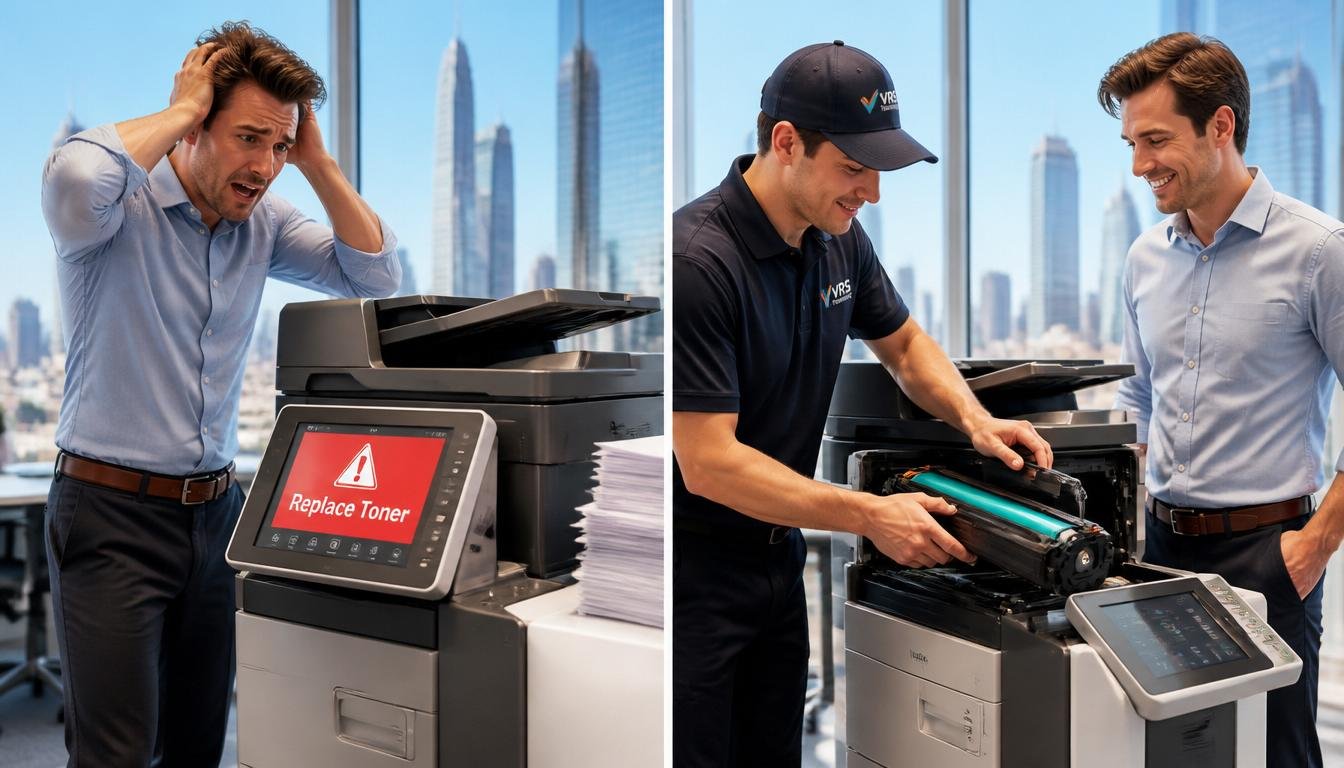
There are few office scenarios more panic-inducing than the dreaded “Replace Toner” light flashing red just fifteen minutes before a critical board meeting or a major shipping deadline. Unfortunately, a printer outage is rarely viewed as a critical emergency by management until operations completely grind to a halt. Whether it is a catastrophic mechanical failure or simply an empty toner cartridge that nobody remembered to order, the end result is exactly the same: your business workflows die. The impact of a printer outage extends far beyond minor annoyance; it drains company finances, creates unexpected security vulnerabilities, and destroys employee morale. In today’s fast-paced corporate landscape, businesses must adopt automated, proactive print management to survive and thrive.
Why Does a Simple Printer Outage Cause a Ripple Effect Across Departments?
When a multifunction printer goes offline, the immediate assumption is that someone just has to wait a little longer to read their meeting agenda. However, in an interconnected modern enterprise, a single hardware failure triggers a devastating ripple effect across multiple departments.
The Logistics and Supply Chain Bottleneck
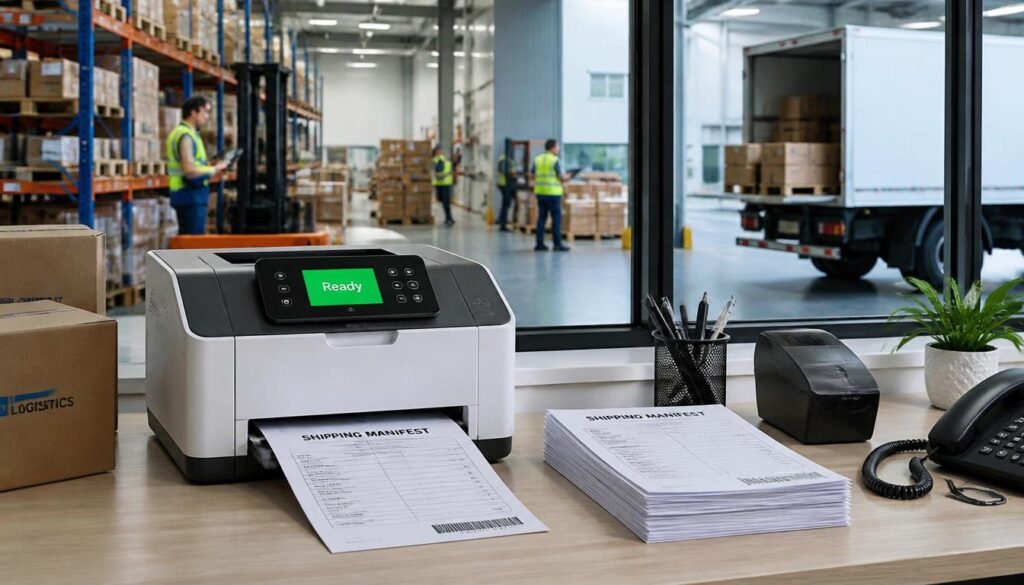
Consider a busy warehouse or logistics hub in KSA. The entire operation relies on the physical printing of shipping manifests, customs declarations, and delivery dockets. If the primary industrial printer experiences an outage, trucks cannot be loaded, drivers cannot leave the facility, and client deliveries are delayed. A machine worth a few thousand Dirhams can effectively paralyze a supply chain worth millions. In this scenario, you aren’t just paying for a broken gear; you are paying for missed delivery SLAs and damaged client relationships.
HR and Legal Delays
Despite the rise of digital signatures, physical ink is still required for many highly sensitive processes. Human Resources departments rely on printing for onboarding packets, visa applications, and employee contracts. Legal and sales teams require physical copies for wet signatures on high-value corporate agreements. When a printer outage strikes, revenue-generating contracts are stalled. A client ready to sign a lucrative deal may be forced to wait, giving them time to second-guess the agreement.
The Hidden Salary Waste
Perhaps the most damaging aspect of a printer outage is the invisible financial bleed: wasted payroll. If a department of five highly-paid employees is delayed for two hours because they cannot print necessary documentation, you are paying ten hours of premium wages for zero output.
“A printer outage doesn’t just stop paper from coming out of a machine; it stops invoices from being mailed, products from being shipped, and revenue from being recognized.” — IT Operations Expert
According to global research from Gartner, IT downtime can cost businesses an average of $5,600 per minute. While a localized printer outage isn’t a total server crash, the cumulative hourly loss of employee productivity, especially when repeated across the year, can easily cost a company tens of thousands of Dirhams.
When Does an Empty Toner Cartridge Become a Major Cybersecurity Risk?
It sounds dramatic to link an empty toner cartridge to a data breach, but the connection is incredibly real and increasingly common. When the office printer goes down, deadlines do not disappear. Employees are put under immense pressure to deliver results, and in their desperation to get the job done, they often bypass corporate security protocols. This phenomenon is known as “Shadow IT.”
The Desperation Workaround
Imagine a financial analyst who urgently needs to print a confidential Q3 earnings report, but the office multifunction device is out of black toner. To meet their deadline, the employee might email the highly sensitive document to their personal Gmail account so they can print it at home. Alternatively, they might save the file to an unencrypted, personal USB drive and run across the street to a public, retail print shop.
Data Leaks and Compliance Failures
By taking these “desperation workarounds,” the employee has unknowingly exposed corporate data to unsecured external networks. The public computer at the retail print shop might be infected with malware, or the employee might accidentally leave the USB drive in a taxi.
What started as a simple lack of toner has suddenly escalated into a severe data leak. In the UAE, where the Data Protection Law mandates strict control over personal and corporate data, this kind of breach can result in massive fines and reputational ruin. Ensuring that your devices are always online and properly supplied is a fundamental pillar of secure printing solutions.
Why the Hidden Costs of Toner Hoarding Are Hurting Your Bottom Line
For decades, the standard corporate response to the fear of a printer outage has been “toner hoarding.” Office managers, terrified of running out of supplies during a critical moment, will simply buy twenty extra toner cartridges and stuff them into a dark supply closet. While this seems like a logical safety net, it is actually a massive financial liability.
Capital Depreciation and Dead Inventory
High-quality OEM toner cartridges are expensive. When you buy massive quantities in advance, you are tying up thousands of Dirhams in static inventory. That is capital that could be actively invested in marketing, new software, or employee training. Furthermore, toner is not immortal. If it is stored in a room that is too hot or humid, the toner powder can clump, rendering it useless.
Even worse, printer fleets evolve. If your IT department decides to upgrade your hardware, those twenty hoarded cartridges specifically designed for the old machines instantly become expensive paperweights.
Theft and Supply Shrinkage
Unmanaged supply closets are notorious for “shrinkage.” Because high-yield toner cartridges have significant resale value, they frequently disappear from poorly monitored storage rooms. Without a tracked, automated system, it is nearly impossible for procurement officers to know if a cartridge was legitimately used by the marketing department or if it walked out the back door.
Traditional Hoarding vs. Modern JIT Supply
Metric
Traditional Toner Hoarding
Just-in-Time (JIT) Auto-Replenishment
Capital Investment
High (Cash tied up in closet inventory)
Zero (Pay only when needed)
Outage Risk
Medium (Still reliant on human memory to reorder)
Near Zero (System orders automatically)
Storage Space
Requires dedicated, climate-controlled closets
Requires no long-term storage
Waste Potential
High (Printers may be upgraded before use)
Zero (Cartridges matched to active fleet)
How Can Automated Supply Management Eliminate the “Toner Panic”?
The modern solution to both printer outages and the financial waste of toner hoarding is Just-in-Time (JIT) automated fulfillment, usually provided as part of a comprehensive Managed Print Service (MPS).
Predictive Ordering and Fleet Monitoring
Instead of relying on an office manager to visually check toner levels and manually place an order, intelligent software takes over the entire process. A secure, cloud-based monitoring tool tracks the toner levels of every device in your fleet. It does not monitor the content of your documents; it purely reads the hardware data.
When a specific printer drops to 15% toner capacity, the system automatically triggers an alert to your provider. A fresh, correct OEM cartridge is immediately dispatched to your office, arriving days before the current cartridge actually runs dry.
Seamless Integration
This automated system eliminates the human error that leads to empty toner cartridges. There is no panic, no expedited shipping fees, and no frantic trips to the local electronics store. The replacement arrives exactly when it is needed, allowing your employees to remain entirely focused on their actual jobs rather than acting as amateur supply chain managers. By partnering with a premier supplier, you ensure your office operations never skip a beat.
How Managed Print Services (MPS) Prevent Mechanical Outages in KSA
While automated toner fulfillment solves the supply issue, it does not prevent a mechanical printer outage. Gears strip, fusers burn out, and rollers lose their grip. To prevent these mechanical failures from halting your business, you need the holistic protection of Managed Print Services (MPS) and a robust Annual Maintenance Contract (AMC).
Proactive Maintenance vs. Reactive Repair
The traditional “break-fix” model is inherently flawed. You wait for the machine to break, you suffer the downtime, and then you call for help. MPS providers operate proactively. Through remote monitoring and scheduled maintenance visits, technicians replace wearable parts before they fail. They clean the electrostatic drums, replace the feed rollers at specific page-count milestones, and ensure the fuser is operating at the correct temperature. This preventative care extends the lifespan of the hardware and drastically reduces the likelihood of a mid-day catastrophic failure.
The KSA Standard: Aggressive SLAs
In KSA’s hyper-competitive commercial sector, every second counts. If a mechanical fault does occur, you cannot afford to wait 48 hours for a technician to source a part. When you engage in comprehensive AMC contracts for copiers, you are purchasing peace of mind in the form of a Service Level Agreement (SLA).
Top-tier providers guarantee an on-site technician within a 4-to-6 hour window. These specialized technicians arrive with vehicles stocked with the exact OEM parts required for your specific machine, ensuring a rapid, first-time fix. If a machine is completely unrepairable on-site, elite providers often offer emergency loaner devices, ensuring your business operations continue uninterrupted. (For instance, if an emergency strikes, knowing you have access to same-day copier rental equivalents can save a critical project).
Conclusion
A printer outage is not an unavoidable act of nature; it is a completely preventable business disruption. Whether it is caused by a mechanical failure or a simple lack of toner, the resulting downtime drains your finances, frustrates your staff, and forces employees into risky cybersecurity workarounds.
The era of hoarding toner in closets and waiting for machines to break is over. Modern businesses require intelligent, automated solutions that keep operations flowing seamlessly. Stop letting empty toner and unexpected hardware faults dictate your productivity.
Protect your payroll, secure your data, and optimize your workflow by transitioning to automated toner fulfillment and comprehensive Managed Print Services. Explore the tailored solutions available at Supplies Hub today, and guarantee that your office never experiences another crippling printer outage.
Hasnain
SEO & Content Marketing Specialist focused on building search-driven brands through strategic content, organic growth, and audience-first storytelling. Skilled in modern SEO, content strategy, and creating scalable digital experiences.
Hasnain
SEO & Content Marketing Specialist focused on building search-driven brands through strategic content, organic growth, and audience-first storytelling. Skilled in modern SEO, content strategy, and creating scalable digital experiences.
Summary: An e-procurement system helps businesses control purchasing through digital requests, approvals, supplier management, purchase orders, and spend tracking. For Saudi companies managing multiple suppliers, branches, and recurring
If your business relies on chaotic paper trails, lost email threads, and manual invoice matching, you are already falling behind. Traditional purchasing methods simply cannot keep up with
Inefficient purchasing and unmanaged tail spend silently cost businesses millions of riyals every year. If your procurement team is drowning in manual data entry instead of building strategic