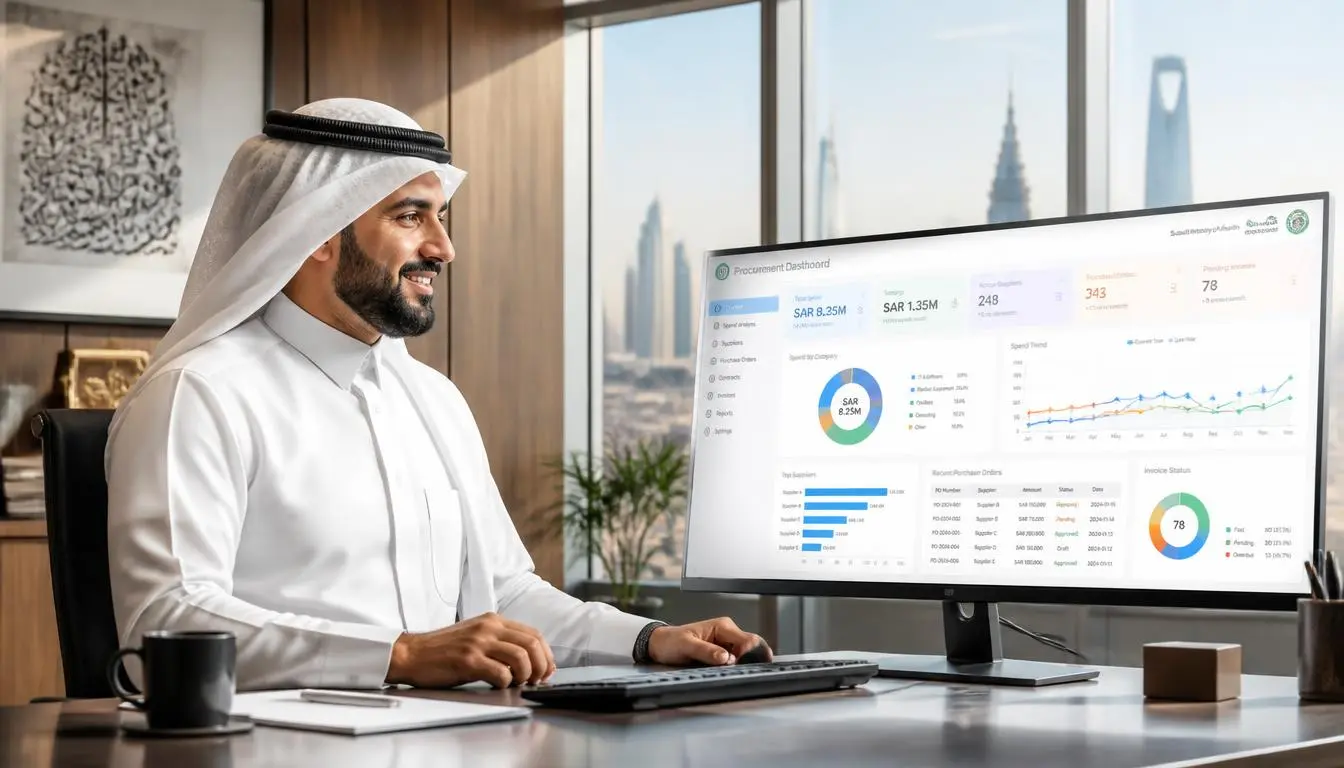
Inefficient purchasing and unmanaged tail spend silently cost businesses millions of riyals every year. If your procurement team is drowning in manual data entry instead of building strategic vendor relationships, your bottom line is suffering. Enter Procurement as a Service (PaaS) a powerful hybrid model combining cloud-based technology with expert managed services. PaaS is quickly becoming a foundational pillar for digital transformation across the Middle East. If you want to stop revenue leaks and scale your operations efficiently, this guide will show you exactly when, how, and why your KSA-based business should adopt this model.
What is Procurement as a Service (PaaS)?
Procurement as a Service (PaaS) is a modern business model where organizations outsource specific segments or the entirety of their procurement functions to a specialized third-party provider.
However, it is vital to understand that PaaS goes far beyond traditional Business Process Outsourcing (BPO). While BPO historically focused on moving manual labor to cheaper offshore teams, PaaS introduced a “Procurement Orchestration” model. It pairs cutting-edge, AI-driven SaaS platforms with highly specialized human expertise.
When you adopt PaaS, you are essentially plugging your business into a pre-built, highly optimized procurement ecosystem. This ecosystem typically includes three core components:
- Cloud-based Procure-to-Pay (P2P) platforms: Software that acts as a single pane of glass for all requisitions, approvals, and reporting.
- Strategic sourcing and spend analysis: Data-driven insights that identify exactly where you are overspending and where you can consolidate.
- Category expertise: Access to professionals who specialize in specific procurement categories, such as IT hardware, facilities management, or office supplies.
By combining digital transformation with human intelligence, PaaS allows businesses to modernize their purchasing workflows without having to build costly internal infrastructure from scratch.
When Should Your Business Consider Procurement as a Service?
Knowing exactly when to transition to a PaaS model can be the difference between scaling smoothly and hitting an operational wall. You should strongly consider adopting PaaS if your business is experiencing any of the following trigger points:
1. You Are Scaling Rapidly
When a business enters a hyper-growth phase, operational demands multiply overnight. If your company is growing faster than your internal procurement team can hire, train, and onboard new staff, purchasing bottlenecks will inevitably slow you down. PaaS provides immediate scalability, allowing you to handle a massive influx of purchasing requests without expanding your internal headcount.
2. You Suffer from a Lack of Spend Visibility
Are different departments buying software and supplies independently? Rogue spend (also known as maverick spend) and unmanaged tail spend severely eat into profit margins. If your Chief Financial Officer (CFO) cannot easily see a unified dashboard of who bought what, from whom, and at what price, it is time for a centralized PaaS solution to regain control of your budget.
3. You Are Pushing for Digital Transformation
For businesses in Saudi Arabia, aligning with the digitization goals of Saudi Vision 2030 is a major priority. If your corporate mandate includes modernizing operations, moving away from paper trails, and embracing cloud-based procurement technology, PaaS is the fastest route to achieving those digital transformation milestones.
4. You Are Facing Severe Resource Constraints
If your existing team is bogged down in tactical, day-to-day tasks like chasing down invoices, matching purchase orders, and doing manual data-entry, they cannot focus on strategic supplier relationship management. PaaS takes the tedious, repetitive work off their plates, freeing them up to focus on high-level strategy and business growth.
How Does Procurement as a Service Work?
Adopting Procurement as a Service is a structured, multi-phase journey designed to seamlessly integrate with your existing business operations. Here is how the workflow typically unfolds:
Phase 1: Spend Analysis & Centralization
The process begins with an audit. The PaaS provider will ingest your historical purchasing data to identify immediate savings opportunities, redundancies, and process bottlenecks. This creates a baseline for measuring future success and highlights immediate areas where category consolidation will yield quick financial wins.
Phase 2: Technology Implementation
Next, the provider deploys a centralized, cloud-based platform such as the Supplies Hub procurement dashboard to serve as the command center for your business. This technology digitizes the entire Procure-to-Pay (P2P) lifecycle. Employees can easily submit requisitions, managers can approve them with a single click, and finance teams get real-time visibility into cash flow.
Phase 3: Vendor Onboarding & Orchestration
A key component of PaaS is access to a pre-vetted, localized network of suppliers. The provider handles the heavy lifting of vendor onboarding, ensuring that every supplier meets strict compliance, quality, and delivery standards. For businesses in the KSA, this means tapping into an ecosystem of reliable regional vendors without spending months negotiating individual contracts.
Phase 4: Continuous Optimization
PaaS is not a “set it and forget it” software installation. It involves continuous, active management. Category experts continually leverage your purchasing data for ongoing negotiations, contract renewals, and compliance tracking.
“Procurement as a Service doesn’t replace your internal team; it gives them superpowers. By automating the tactical, administrative work, your team is finally free to focus on strategic growth and deep vendor partnerships.” — Supply Chain & Procurement Expert
Why is PaaS the Right Choice for Your Business?
The shift toward PaaS is accelerating globally because the business benefits are immediate, measurable, and highly impactful. Here is why it is the right choice for forward-thinking organizations:
Immediate Cost Savings
The most obvious benefit of PaaS is the reduction in direct and indirect costs. Because PaaS providers aggregate purchasing volume across multiple clients, they can harness immense bulk purchasing power. Furthermore, their expert negotiation tactics ensure you get the best possible rates. According to industry benchmarks by Gartner, businesses utilizing procurement managed services routinely see operational cost reductions of 15% to 25% within the first year.
Agility and Speed
Time is money. PaaS dramatically accelerates purchase-to-pay cycles. Vendor onboarding that used to take weeks can be completed in days. Automated approvals mean that vital supplies and services reach your teams faster, ensuring that your operational momentum never stalls due to bureaucratic red tape.
Risk Mitigation & Compliance
Navigating regional tax laws and compliance standards can be incredibly complex. A localized PaaS provider ensures strict adherence to KSA VAT compliance, reduces the risk of invoicing fraud, and builds robust supply chain resilience. By centralizing all supplier data and vetting processes, you protect your business from third-party risks and supply chain disruptions.
Access to Specialized Knowledge
Procurement is highly specialized. Buying IT software licenses requires completely different expertise than buying industrial safety equipment. PaaS allows you to plug the skills gap instantly. You gain access to specialized category managers without the massive overhead of hiring them as full-time employees.
PaaS vs. Traditional Procurement Outsourcing (BPO): What’s the Difference?
It is easy to confuse PaaS with traditional Business Process Outsourcing (BPO), but the two models are fundamentally different in execution and philosophy.
Traditional BPO: Historically, BPO was strictly about labor arbitrage. Companies outsourced highly manual, repetitive procurement processes to offshore teams to save on salaries. The systems remained manual, the teams were largely disconnected from the client’s internal company culture, and the primary goal was just keeping the lights on at a lower cost.
Modern PaaS: PaaS is inherently technology-first. It utilizes API integrations, AI-driven automation, and real-time analytics. Instead of just throwing cheap labor at a manual problem, PaaS fixes the root of the problem with software, and layers on strategic, highly integrated human expertise. It focuses on proactive strategy and spend analysis rather than reactive data entry.
How to Choose the Right PaaS Provider in KSA
Selecting the right partner is critical to the success of your digital procurement transformation. If you operate in the Kingdom of Saudi Arabia, you need a provider that understands the local landscape. Use this checklist when evaluating potential partners:
- Do they have a robust, localized supplier network? Global software is useless if it doesn’t connect you to reliable vendors in Riyadh, Jeddah, or Dammam.
- Do they offer a seamless digital platform tailored to B2B e-commerce? The interface should be as intuitive for your employees to use as consumer shopping apps.
- How do they handle localized compliance? Ensure they have deep expertise in local invoicing standards, Arabic language support where necessary, and strict KSA tax compliance.
This is where the Supplies Hub advantage becomes clear. Unlike faceless, purely international software vendors, Supplies Hub is built specifically for the regional market. We provide the premier B2B procurement platform in the region, offering both the cutting-edge technology and the deeply localized vendor network necessary to execute a successful, risk-free PaaS strategy.
Conclusion
Procurement as a Service is the modern, scalable answer to outdated, decentralized purchasing processes. By blending powerful cloud technology with expert category management, PaaS empowers your business to achieve unprecedented spend visibility, cut costs, and drive digital transformation.
Don’t let manual purchasing hold your business back. Take control of your spend today. Request a consultation with Supplies Hub to analyze your current procurement strategy and see the PaaS model in action.