No products in the cart.


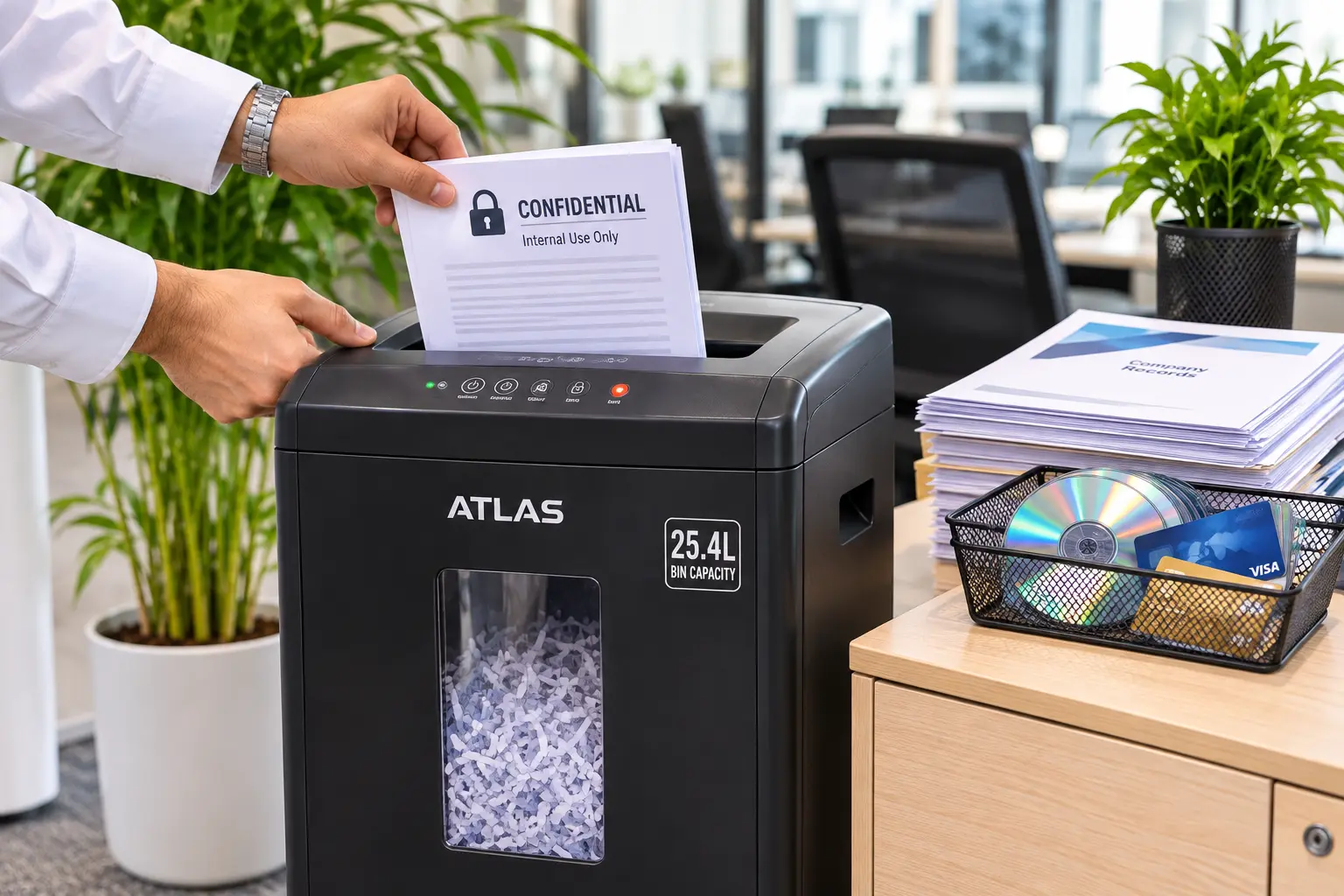
Quick Summary: Learning how to choose a paper shredder for a Saudi office depends on four measurable specifications: DIN 66399 security level, sheet pass capacity, motor duty cycle,

No products in the cart.
Quick Summary:
Choosing an e-procurement platform in Saudi Arabia is not simply about finding software with the longest feature list. The right solution should fit your purchasing workflow, integrate with existing systems, support supplier adoption, improve spend visibility, and meet the compliance requirements relevant to your organization.
For KSA businesses, local factors such as ZATCA e-invoicing, data security, multi-location purchasing, supplier availability, and implementation support should also influence the final decision.
Buying for a growing business can become complicated surprisingly quickly. A few suppliers become dozens, approvals move into email or WhatsApp, purchase orders are difficult to track, and finance teams spend valuable time matching invoices with deliveries.
An e-procurement platform brings these activities into a more controlled digital workflow.
But choosing the wrong system can simply replace one problem with another. Employees may avoid a difficult platform, suppliers may continue sending quotations manually, or finance teams may discover too late that important integrations are missing.
That is why choosing an e-procurement platform should begin with your actual purchasing process not a software vendor’s feature list.
For Saudi businesses, the decision also needs a local perspective. Tax documentation, electronic invoicing, supplier coverage, data security, Arabic-language requirements where relevant, and operations across cities such as Riyadh, Jeddah, and Dammam can all affect whether a solution works in practice.
Traditional purchasing often depends on spreadsheets, phone calls, emails, separate vendor portals, and manually approved purchase requests. That may work at a small scale, but complexity grows as purchasing volume, employee numbers, suppliers, and branches increase.
Digital procurement creates a structured path from an initial request to approval, sourcing, purchase order, delivery, invoice, and reporting.
This can give procurement and finance teams better visibility into:
Saudi Arabia’s wider shift toward electronic transactions also makes digital purchasing increasingly relevant. ZATCA’s e-invoicing program, for example, has progressed from invoice generation into Phase 2 integration, under which targeted taxpayers integrate their electronic invoicing solutions with the Fatoora platform. Phase 2 is being introduced in waves.
Companies that want to understand the fundamentals first can read our guide to what e-procurement is and how it transforms the supply chain.
Not every company needs a complex enterprise procurement suite.
The better question is whether your current purchasing process has become difficult to control.
You may have reached that point when purchase requests regularly arrive through email or WhatsApp, buyers repeatedly request quotations for the same products, departments use different suppliers for similar items, or finance cannot easily see committed spending before invoices arrive.
Other warning signs include frequent off-contract purchases, repetitive purchase orders, inconsistent pricing between locations, delayed approvals, missing delivery records, and procurement reports that require hours of spreadsheet work.
For businesses operating several offices, the problem can grow faster. A Riyadh office may buy from one supplier while teams in Jeddah or Dammam source the same products elsewhere at different prices and terms.
A standardized procurement process can help identify where those inefficiencies occur before you select technology to automate them.
Supplies Hub Procurement Insight: The right time to digitize procurement is usually before purchasing complexity becomes an accounting and operational problem.
Start with four areas:
Business fit → Procurement capability → Saudi requirements → Implementation fit
A platform can offer hundreds of features and still be wrong for your organization.
Before comparing vendors, document how a typical purchase happens today. Identify who raises the request, who approves it, where quotations come from, how a purchase order is created, who confirms delivery, and how finance validates the final invoice.
Then ask each potential platform to show how it improves that exact process.
An attractive product catalog is useful, but e-procurement goes much further than online shopping.
A capable system should support the stages that matter to your organization, which may include:
Purchase requisition → Approval → RFQ → Supplier quotation → Comparison → Purchase order → Delivery → Invoice → Reconciliation
Look for functions such as configurable approval workflows, role-based permissions, cost centers, budget controls, RFQs, supplier management, recurring orders, purchase orders, receiving records, invoice management, and spend reporting.
For organizations with stronger financial controls, investigate whether the system supports three-way matching.
Three-way matching compares the:
Purchase Order → Goods Receipt → Supplier Invoice
If the company ordered 20 monitors, received 18, but was invoiced for 20, the discrepancy should be visible before payment is approved.
The objective isn’t to automate unnecessary steps. It is to create a reliable record of what was requested, approved, ordered, received, and invoiced.
User experience is often underestimated during procurement software selection.
Procurement professionals may understand RFQs, cost centers, sourcing events, and approval matrices. An employee who orders supplies twice a year probably does not.
During a demo, ask an ordinary employee to perform a basic task:
Find an item → create a request → assign the correct cost center → submit it for approval → track the order.
If this simple process requires extensive training, adoption may become difficult.
Poor adoption can push employees back toward email, spreadsheets, petty cash, or direct supplier purchases. The company then pays for a procurement platform while a meaningful share of purchasing continues outside it.
A useful system should make compliant purchasing easier than bypassing the process.
Procurement rarely operates independently.
Purchase orders, supplier records, invoices, budgets, payments, employee identities, and inventory information may already exist in an ERP, accounting platform, HR system, or inventory solution.
Ask potential providers whether they support your existing technology through native integrations or APIs.
Common systems may include SAP, Oracle, Microsoft Dynamics, accounting platforms, inventory management systems, Single Sign-On (SSO), and other enterprise applications.
But don’t accept “we integrate with ERP systems” as a complete answer.
Ask:
Integration complexity discovered after signing a contract can significantly change implementation time and total cost.
For businesses in Saudi Arabia, invoicing should be part of the platform discussion from the beginning.
ZATCA introduced e-invoicing in two phases. Phase 1 covers generating and storing compliant electronic invoices and notes, while Phase 2 adds integration requirements for targeted taxpayers, including connection with Fatoora and specific electronic invoice requirements.
The rollout remains active. In July 2026, ZATCA announced Wave 25 for taxpayers whose VAT-subject revenues exceeded SAR 187,500 during 2022, 2023, 2024, or 2025. Targeted taxpayers in that wave are required to integrate their e-invoicing solutions with Fatoora by February 1, 2027.
When evaluating a platform, ask how it handles:
ZATCA’s guidance states that Phase 2 solutions need to generate invoices in required formats and support integration with Fatoora.
This is an area where precise questions are better than simply asking whether software is “ZATCA compliant.”
An e-procurement platform may contain supplier details, employee information, purchasing histories, prices, contracts, approvals, invoices, and other commercially sensitive records.
Security therefore needs to be evaluated alongside functionality.
Ask vendors where information is hosted, how it is encrypted, who can access it, how backups work, how incidents are managed, and what happens to your information when the contract ends.
Organizations should assess their specific Saudi regulatory obligations rather than assuming the same hosting requirements apply to every business. The National Cybersecurity Authority publishes cybersecurity controls covering areas including third parties, cloud computing, hosting, and data protection for entities within the applicable scope.
Your procurement, IT, cybersecurity, legal, and compliance teams should therefore be involved where the sensitivity or scale of procurement data requires it.
Procurement digitization has two sides: buyer adoption and supplier adoption.
A company can implement an excellent internal system and still end up processing supplier quotations and invoices manually if vendors cannot use it.
Find out how suppliers:
Also ask whether suppliers are charged fees.
A supplier network dominated by small and medium-sized local businesses may have very different technology requirements from one dominated by multinational vendors.
Supplier adoption rate should therefore be treated as part of platform ROI.
If suppliers continue relying on PDFs, emails, and spreadsheets for most transactions, your procurement process has only been partially digitized.
A procurement process that works for one office may struggle when the company expands.
Saudi organizations operating across Riyadh, Jeddah, Dammam, and other locations should evaluate support for multiple delivery addresses, departments, cost centers, approval hierarchies, budgets, catalogs, and reporting structures.
For example, procurement may be centrally managed in Riyadh while products need to be delivered directly to separate offices.
Management should still be able to answer:
How much did each location spend? What did it buy? From whom? Who approved it?
This is also where vendor consolidation can become valuable.
Supplies Hub’s procurement services in Saudi Arabia are structured around consolidating categories such as stationery, printing supplies, computers, networking equipment, furniture, cleaning products, and pantry supplies under one procurement relationship, with recurring or on-demand delivery across office and branch locations.
The subscription price tells only part of the story.
A more useful measure is the Total Cost of Ownership (TCO).
Think of it as:
TCO = Software + Implementation + Integration + Data Migration + Training + Supplier Onboarding + Support + Upgrades
Ask about costs for additional users, API access, custom integrations, catalog creation, configuration, supplier onboarding, premium support, and future upgrades.
Then compare cost against adoption.
A low-cost system that manages only a small portion of company purchasing may deliver less value than a more suitable platform capable of bringing most addressable spend into one controlled process.
Companies considering whether technology alone is enough may also want to compare it with Procurement as a Service (PaaS), where technology and external procurement expertise can be combined.
Don’t allow the vendor to control the entire demonstration.
Give each shortlisted provider the same real purchasing scenario from your organization and ask them to complete it live.
For example:
“An employee in our Jeddah office needs 20 monitors. The purchase requires department approval, budget validation, quotations, a PO, delivery confirmation, and invoice matching. Show us the complete process.”
Then ask:
A real scenario makes it much harder for impressive-looking but irrelevant features to dominate the decision.
Create a weighted scorecard before receiving final vendor proposals.
| Evaluation Area | Starting Weight |
| Procurement workflow fit | 25% |
| KSA compliance and local fit | 20% |
| Integration capability | 15% |
| Employee and supplier experience | 15% |
| Reporting and spend visibility | 10% |
| Implementation and support | 10% |
| Total cost of ownership | 5% |
These percentages are not universal industry standards. They are a practical starting framework.
A highly regulated organization may give security and compliance more weight. A rapidly expanding company may prioritize integrations and scalability. A business trying to control indirect spend may prioritize catalog management and purchasing workflows.
Define your priorities before vendors influence them.
One of the biggest mistakes is buying based on feature count.
More functionality doesn’t automatically create more value.
Companies also run into problems when they ignore supplier adoption, underestimate master-data cleanup, delay integration discussions until implementation, or compare platforms only on subscription fees.
Another overlooked issue is data portability.
Ask what happens if you change providers three years from now. Can you export supplier records, purchase orders, approvals, contracts, invoices, and transaction histories in usable formats?
Finally, don’t choose only for today’s purchasing volume.
Consider where the organization could be in three to five years: more employees, more branches, larger budgets, additional categories, and stronger financial controls.
Not every Saudi company needs a large global source-to-pay transformation.
For many organizations, the immediate problem is simpler: too many suppliers, repetitive purchase orders, fragmented deliveries, inconsistent pricing, and separate invoices for routine workplace requirements.
Supplies Hub’s corporate procurement services focus on consolidating workplace purchasing across categories such as stationery, IT equipment, networking products, printing supplies, office furniture, cleaning products, and pantry essentials. Businesses can manage recurring or on-demand requirements through a more centralized supplier relationship.
For companies evaluating whether to manage these processes internally or externally, our guide to procurement outsourcing services in KSA explains how the outsourced model works.
You can also explore the difference between day-to-day buying and long-term sourcing in our guide to strategic vs. tactical procurement.
The objective is not to add technology simply because digital procurement is growing. It is to create a purchasing model that gives your team better control without making everyday buying harder.
Before making the final decision, confirm that the solution:
The best e-procurement platform is not necessarily the one with the most features. It is the one that can move the greatest share of your real purchasing activity into a controlled, visible, and manageable workflow.
For businesses looking to simplify recurring workplace purchasing, explore Supplies Hub procurement services in KSA to see how centralized sourcing, bulk purchasing, scheduled delivery, and account management can reduce procurement complexity.
An e-procurement platform is software used to manage business purchasing electronically. Depending on the solution, it can handle purchase requests, approvals, supplier quotations, purchase orders, catalogs, receiving, invoices, supplier management, and spend reporting. It differs from a simple B2B marketplace because it can control the workflow surrounding the purchase, not just the transaction.
Start with your actual procurement workflow and identify the problems you need to solve. Then evaluate platforms for purchasing functionality, ERP and accounting integrations, employee usability, supplier adoption, security, applicable KSA compliance requirements, multi-location support, implementation services, and total cost of ownership.
If a solution performs functions connected with electronic invoicing for a business subject to Saudi e-invoicing requirements, its invoicing setup needs to meet the requirements applicable to that taxpayer. ZATCA’s Phase 2 rollout requires targeted taxpayers to integrate compliant e-invoicing solutions with Fatoora according to their assigned wave.
An ERP manages broader business processes such as finance, inventory, operations, and sometimes HR. E-procurement focuses specifically on purchasing activities such as requisitions, sourcing, supplier management, approvals, purchase orders, and spend control. Many organizations integrate their e-procurement platform with their ERP rather than replacing it.
Company size alone should not determine the decision. An SME managing many suppliers, frequent purchases, several approvers, or multiple locations may benefit from digital procurement earlier than a larger organization with relatively simple purchasing needs. Procurement complexity and transaction volume are usually more useful indicators than employee count.
No. Etimad supports Saudi government procurement and enables private-sector suppliers and contractors to participate in government tenders and procurement. A private company’s e-procurement platform, by contrast, manages its own internal purchasing workflows, suppliers, approvals, orders, invoices, and spending.

SEO & Content Marketing Specialist focused on building search-driven brands through strategic content, organic growth, and audience-first storytelling. Skilled in modern SEO, content strategy, and creating scalable digital experiences.
SEO & Content Marketing Specialist focused on building search-driven brands through strategic content, organic growth, and audience-first storytelling. Skilled in modern SEO, content strategy, and creating scalable digital experiences.
Related Blogs
Quick Summary: Learning how to choose a paper shredder for a Saudi office depends on four measurable specifications: DIN 66399 security level, sheet pass capacity, motor duty cycle,
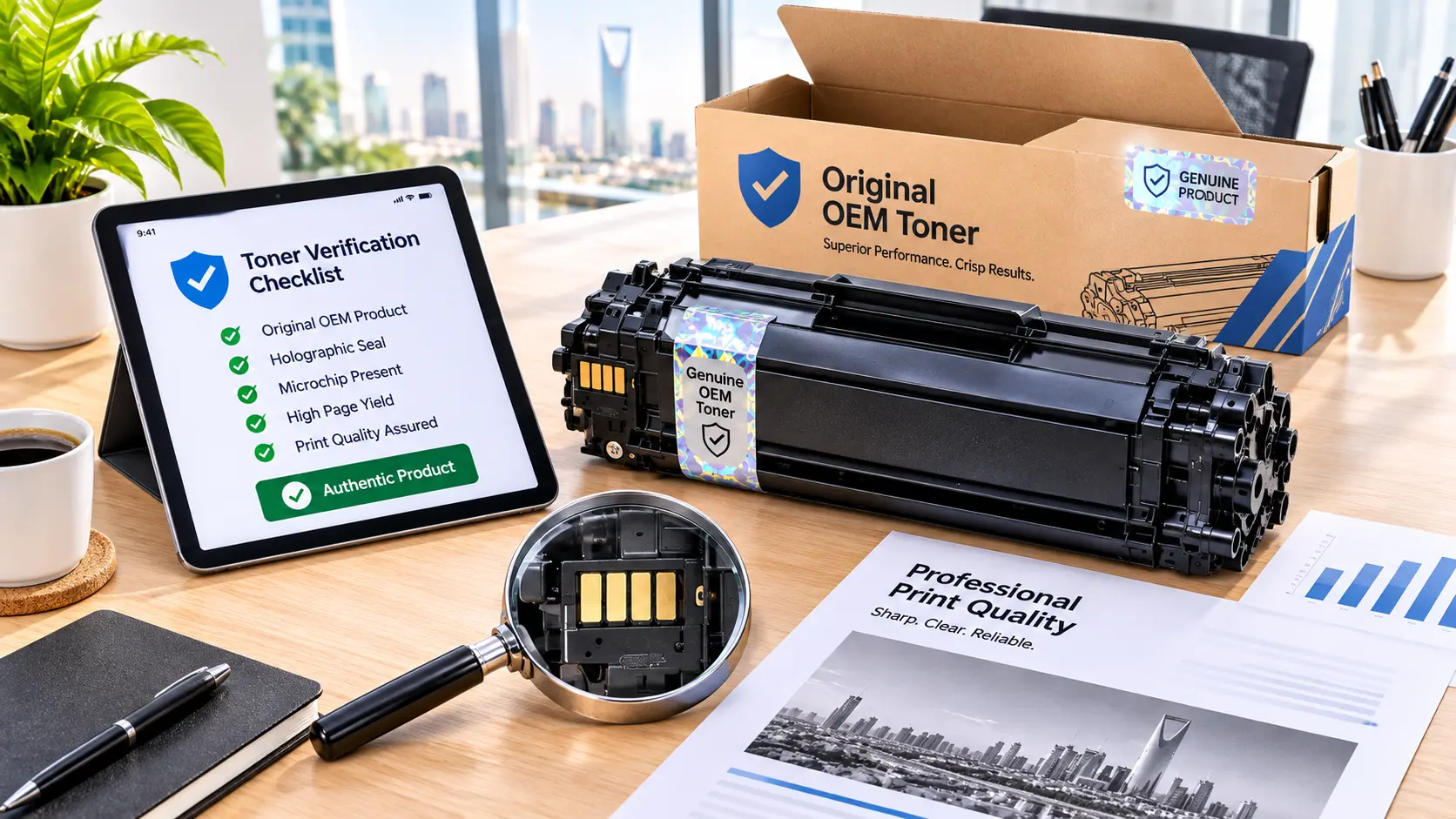
Quick Summary: Comparing original vs compatible toner comes down to four measurable factors: verifiable supply origin, serialized batch traceability, standardized ISO/IEC page yield, and clear hardware support terms.
Quick Summary: Choosing between 70 vs 80 gsm paper depends on document readability, printer feed limits, and double sided ink coverage rather than assuming heavier paper solves every