No products in the cart.


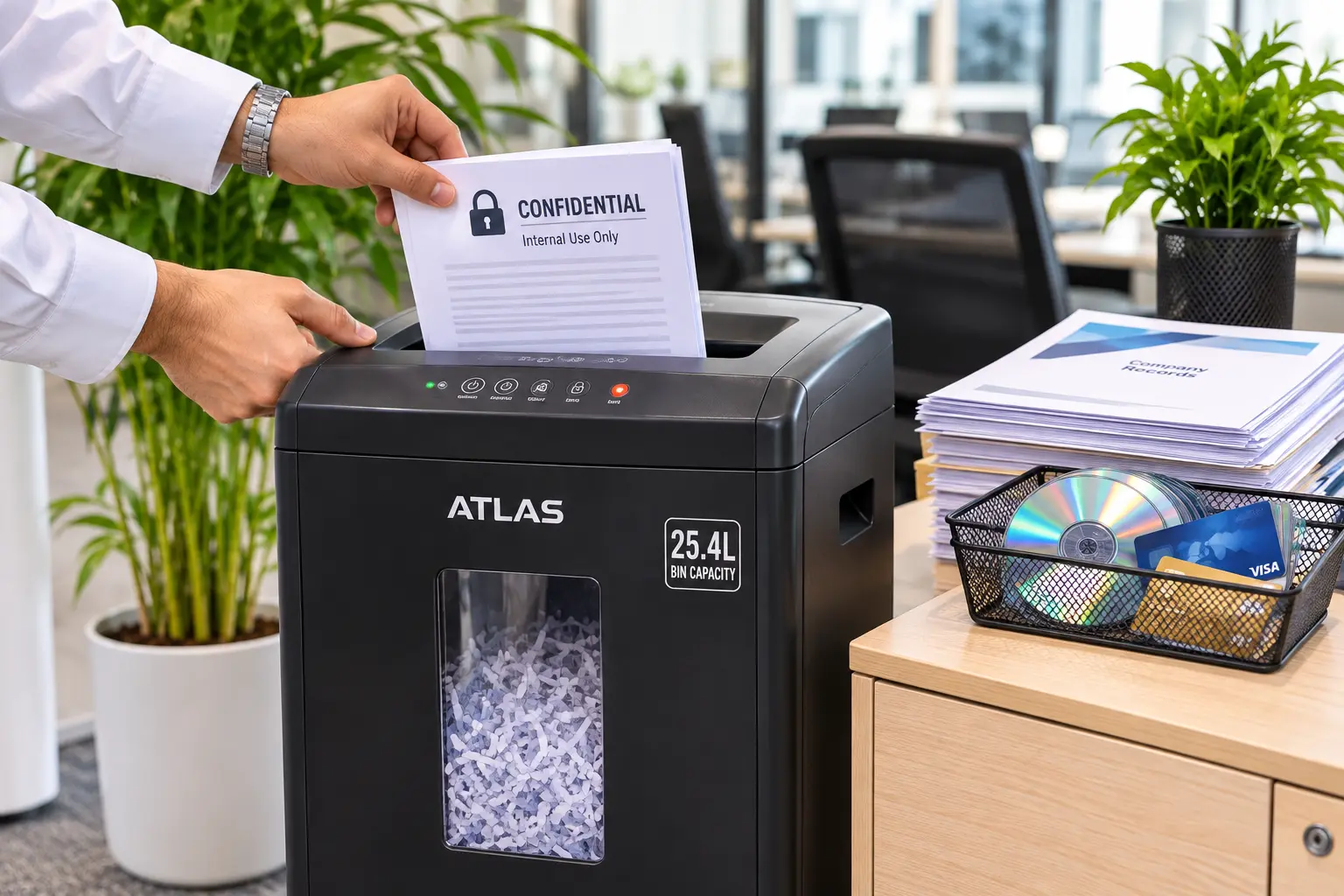
Quick Summary: Learning how to choose a paper shredder for a Saudi office depends on four measurable specifications: DIN 66399 security level, sheet pass capacity, motor duty cycle,

No products in the cart.
Quick Summary:
Running an office supplies RFQ helps organizations eliminate rogue spending, control indirect costs, and secure reliable delivery terms. This guide provides a ready-to-use Bill of Quantities (BoQ) framework, a step-by-step sourcing process, and a 100-point vendor evaluation matrix tailored for corporate buyers.
Managing office consumables across multiple departments often feels like plugging leaks in a sinking ship. Without a structured purchasing process, admin teams end up ordering ad-hoc supplies from local retail shops at inflated prices, while finance struggles with disjointed invoices. An Office Supplies RFQ (Request for Quotation) replaces this guesswork with clear specifications, standardized pricing, and enforceable vendor service level agreements (SLAs).
Whether you are sourcing copy paper, OEM toner, or pantry items, this guide walks you through building an RFQ package, normalizing competing bids, and choosing a vendor that protects both your budget and daily operations.
Office consumables fall into indirect procurement often dismissed as “routine tail spend.” However, ignoring this category creates severe budget drain and administrative drag.
According to procurement benchmark data from the Hackett Group and CAPS Research, indirect categories like office supplies account for less than 2% of total enterprise spend, yet generate up to 25% of all vendor invoices and purchase orders. When unmanaged, companies experience between 18% and 32% maverick spend unapproved, off-contract purchases made by individual staff members.
Key Financial & Operational Risks of Unmanaged Spend:
The true cost of an office supply item is rarely just the sticker price. Buying 50 reams of cheap, uncertified copy paper might save 5% upfront, but high moisture content and rough edges cause persistent copier jams, staff downtime, and emergency technician calls.
A formal RFQ enforces Total Cost of Ownership (TCO). It locks in bulk unit pricing, guarantees price stability for 6 to 12 months, and establishes a single accountable partner. If your team is currently tackling uncontrolled departmental ordering, pairing an RFQ with a proven vendor consolidation strategy is the fastest way to regain control.
Procurement teams frequently confuse RFQs, RFPs, and RFIs. Choosing the wrong document leads to wasted vendor effort and delayed procurement cycles.
| Evaluation Dimension | Request for Information (RFI) | Request for Proposal (RFP) | Request for Quotation (RFQ) |
| Primary Purpose | Gather information on vendor capabilities | Solicit strategic solutions for complex needs | Obtain firm, competitive prices for fixed specs |
| Specification Clarity | Open and exploratory | Functional problem statement | 100% defined Bill of Quantities (BoQ) |
| Vendor Input | Company profiles, product brochures | Detailed methodology, technical strategy | Itemized line-item pricing and SLA commitments |
| Typical Use Case | Researching new e-procurement tools | Outsourcing entire facilities management | Purchasing paper, toner, stationery, pantry goods |
| Award Mechanism | No direct award | Multi-stage technical & commercial review | Lowest evaluated compliant bid |
If your team has already audited its physical stock using an office supplies checklist and knows exactly what products are needed, an RFQ is the appropriate, time-efficient tool.
An ambiguous RFQ invites guesswork. Sourcing specialist Shafeeq E K A highlights a core procurement truth: “If your internal requirement is not crystal clear, vendors will fill the blanks with their own assumptions.” When vendors guess, comparing their quotes becomes impossible.
A comprehensive Office Supplies RFQ package must contain these seven essential components:
Keep this concise. State your company name, office locations, number of employees, and whether deliveries are centralized at a single dock or split across multiple floors and regional branches.
This is the core of your document. Never ask vendors for general catalogs; provide an itemized spreadsheet requiring them to price your exact requirements:
Define where and how orders must arrive:
For companies operating in the Kingdom of Saudi Arabia (KSA) and the wider GCC, regulatory non-compliance introduces severe legal and financial risks:
Set a strict submission format (completed Excel BoQ plus signed PDF), clear response deadlines, and an internal award announcement date.
Provide a single email address for bidder inquiries. Require all vendor questions to be submitted in writing, and distribute an anonymized Q&A register to all invited bidders simultaneously to maintain competitive fairness.
Provide bidders with a pre-formatted structure like the table below to ensure an apples-to-apples comparison:
| Item # | Category | Item Description & Exact Spec | Unit of Measure (UOM) | Est. Monthly Volume | Preferred Brand / Model | Alternative Brand Acceptable? | Unit Price (Excl. VAT) | Extended Total (Excl. VAT) |
| 01 | Paper | A4 Copy Paper, 80 GSM, FSC Certified | Box (5 Reams) | 120 | Double A / HP | No | [Vendor Input] | [Auto-calc] |
| 02 | Imaging | HP LaserJet Toner (CF226A) | Cartridge | 10 | HP Original | No (OEM Only) | [Vendor Input] | [Auto-calc] |
| 03 | Stationery | Ballpoint Pen 0.7mm Blue | Box of 50 | 15 | BIC / Schneider | Yes | [Vendor Input] | [Auto-calc] |
| 04 | Filing | Lever Arch File A4, 75mm Spine | Pack of 10 | 8 | Bantex / Fellowes | Yes | [Vendor Input] | [Auto-calc] |
| 05 | Pantry | Fine Arabica Roast Beans | 1 kg Bag | 25 | Corporate Roast | Yes | [Vendor Input] | [Auto-calc] |
| 06 | Janitorial | 2-Ply Facial Tissues | Pack of 5 Boxes | 40 | Kleenex / Fine | Yes | [Vendor Input] | [Auto-calc] |
Executing an RFQ requires balancing supplier competition with operational manageability. Follow this five-stage process to eliminate post-award surprises:
Before publishing your RFQ, audit historical purchasing data over the last 6 to 12 months. Eliminate duplicate items across teams if Marketing orders one brand of sticky notes and Accounting orders another, standardize on a single specification. For practical budgeting frameworks, review our monthly office supplies budget guide.
Inviting 20 vendors creates an overwhelming administrative backlog, while inviting only 2 restricts price competition. The optimal range is 3 to 5 vetted B2B suppliers. Confirm that every invited vendor possesses regional logistics capabilities to deliver across your required hubs (e.g., Riyadh, Jeddah, Dammam).
Distribute the RFQ simultaneously with a 7 to 10 business-day submission window. Maintain a single Q&A register. If a supplier points out an ambiguous specification (such as missing core diameters for packaging tape), publish an addendum to all participants and extend the deadline if necessary.
Adopt a two-gate assessment to save evaluation time:
Do not waste time haggling over low-spend items like paperclips. Focus contract negotiations on:
Never evaluate an office supplies vendor on unit prices alone. A supplier boasting a 4% lower price on copy paper will cost you more overall if they impose delivery fees on small orders, deliver 3 days late, or supply brittle off-brand folders that tear within a week.
Use this 100-Point Weighted Vendor Evaluation Matrix to objectively rank proposals:
| Evaluation Pillar | Weight | Scoring Criteria & Benchmark Thresholds |
| 1. Total Commercial Value (TCO) | 35 pts | 35 pts: Lowest overall basket price on core SKUs with a 12-month fixed-price lock and zero delivery fees.25 pts: Competitive pricing with 6-month price lock; minor minimum order fees.10 pts: High prices or volatile quarterly adjustments. |
| 2. Fulfillment & Delivery SLAs | 25 pts | 25 pts: 24–48 hour delivery guarantee; dedicated multi-hub fleet; 98%+ order accuracy SLA.15 pts: 3–5 day delivery window; third-party courier reliance.5 pts: No formal lead-time commitments or compensation for delays. |
| 3. Product Quality & Authenticity | 20 pts | 20 pts: 100% genuine OEM manufacturer certificates; free physical sample sign-off; FSC-certified papers.10 pts: Mixed sourcing; compatible toners offered without performance warranties.0 pts: Grey-market items or refusal to provide samples. |
| 4. Payment Terms & Compliance | 15 pts | 15 pts: Full acceptance of Net 30/60 corporate credit; fully integrated ZATCA Phase 2 e-invoicing.8 pts: Demands 50% prepayment or Net 15 days; manual PDF invoicing.0 pts: Advance payment only or unverified VAT registration. |
| 5. Platform & Account Support | 5 pts | 5 pts: Dedicated B2B account manager; custom online ordering portal with team approval limits.2 pts: Standard email/phone ordering only.0 pts: Unassigned customer service queue. |
Final Score = (Pillar 1 Score x 0.35) + (Pillar 2 Score x 0.25) + (Pillar 3 Score x 0.20) + (Pillar 4 Score x 0.15) + (Pillar 5 Score x 0.05)
(Where each pillar is scored from 0 to 100 before weighting)
Disqualification Rule: Any vendor scoring below 70 total points or under 10 weighted points in Compliance & Payment Terms should be automatically excluded from the final selection.
Even experienced procurement managers stumble when sourcing office consumables. Watch out for these four frequent pitfalls:
| Common Pitfall | Operational Impact | Proactive Procurement Fix |
| Chasing Lowest Unit Price | Unexpected delivery fees, low stock levels, and product breakage. | Evaluate landed Total Cost of Ownership (TCO) including delivery thresholds. |
| Ambiguous Brand Specs | Cheap generic clones delivered, causing printer and equipment breakdown. | Enforce “OEM Original Only” or mandate certified physical sample approval. |
| Rushed Submission Windows | Low response rates and inflated contingency prices from vendors. | Provide vendors with 7 to 10 business days for competitive sourcing. |
| Fragmented Department Orders | High delivery costs and 20 separate delivery interruptions per month. | Implement structured, scheduled reorder cycles and consolidate orders. |
A bidder may deliberately quote below cost on A4 copy paper to win the tender, while quietly marking up specialty items, whiteboard markers, and pantry goods by 35%. Always evaluate quotes on a weighted basket basis reflecting your true historical consumption, rather than an unweighted average of catalog prices.
If your RFQ states “HP 85A Toner or Equivalent,” low-tier bidders will price substandard generic cartridges that yield half the page count and risk damaging printer drums. Specify “OEM Original Only” for sensitive equipment, or explicitly require brand and model disclosure with certified sample approval before bid acceptance.
Issuing an RFQ with 48 items on a Tuesday and demanding responses by Thursday afternoon signals poor planning. Capable vendors with robust logistics networks will pass on the tender, leaving you with opportunistic suppliers who submit rushed, error-prone quotes. Allow vendors 7 to 10 business days to build competitive supply-chain pricing.
Awarding a contract without establishing internal order replenishment rhythms leads to individual branch admins ordering single reams of paper multiple times a week. Establish an organized office supplies inventory reorder framework that bundles replenishment into scheduled bi-weekly or monthly orders.
Running a comprehensive multi-vendor RFQ takes weeks of staff time from drafting BoQs and answering clarifications to normalizing spreadsheets and chasing tax documentation. For organizations seeking to avoid this administrative cycle, partnering with an established B2B platform delivers immediate efficiency.
Supplies Hub streamlines corporate procurement across Saudi Arabia and the GCC by providing an all-in-one supply ecosystem:
Explore our comprehensive corporate procurement services in KSA or contact Supplies Hub today to upload your current supply list for an immediate cost-comparison analysis and corporate pricing proposal.

SEO & Content Marketing Specialist focused on building search-driven brands through strategic content, organic growth, and audience-first storytelling. Skilled in modern SEO, content strategy, and creating scalable digital experiences.
SEO & Content Marketing Specialist focused on building search-driven brands through strategic content, organic growth, and audience-first storytelling. Skilled in modern SEO, content strategy, and creating scalable digital experiences.
Related Blogs
Quick Summary: Learning how to choose a paper shredder for a Saudi office depends on four measurable specifications: DIN 66399 security level, sheet pass capacity, motor duty cycle,
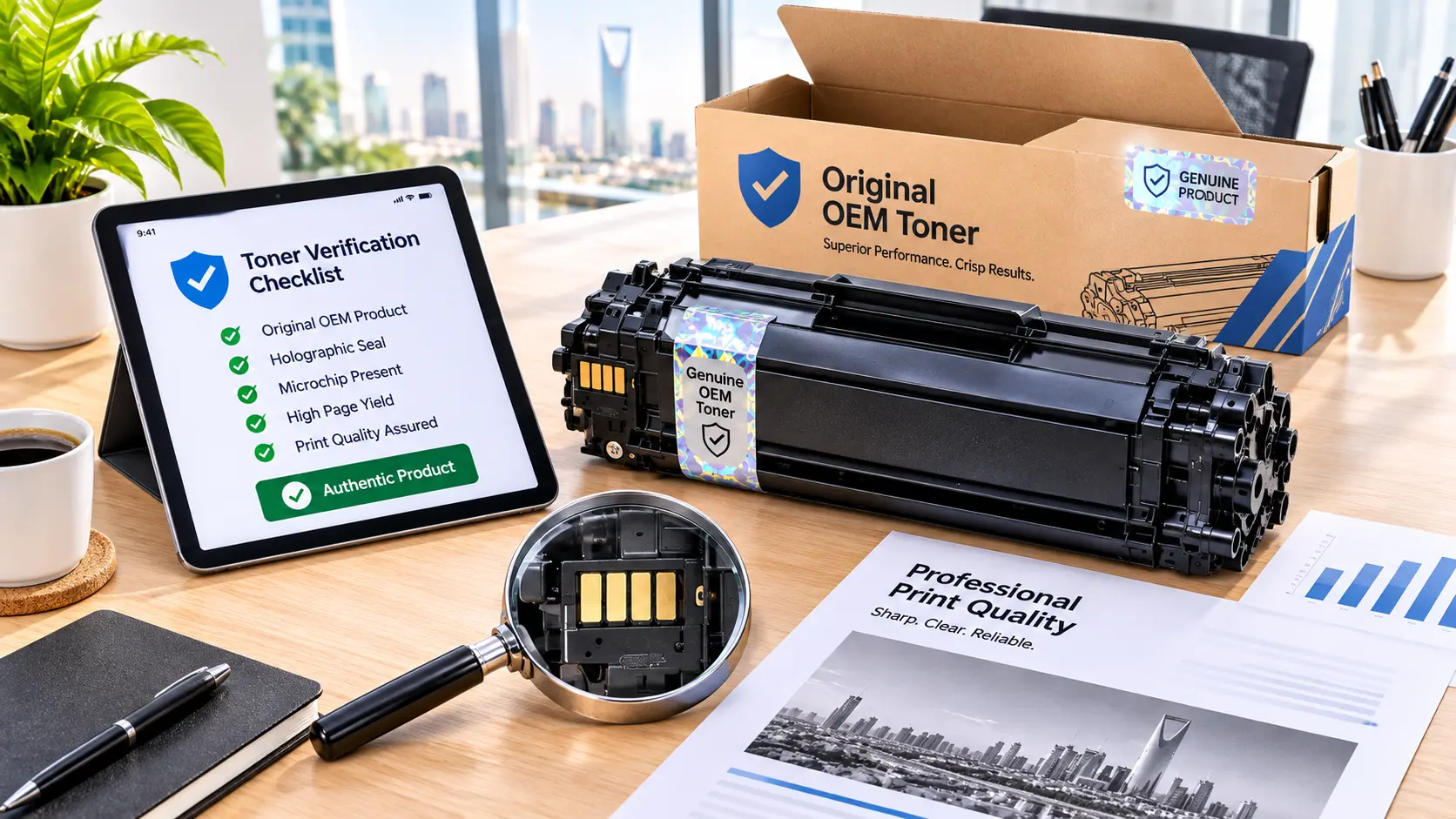
Quick Summary: Comparing original vs compatible toner comes down to four measurable factors: verifiable supply origin, serialized batch traceability, standardized ISO/IEC page yield, and clear hardware support terms.
Quick Summary: Choosing between 70 vs 80 gsm paper depends on document readability, printer feed limits, and double sided ink coverage rather than assuming heavier paper solves every