No products in the cart.

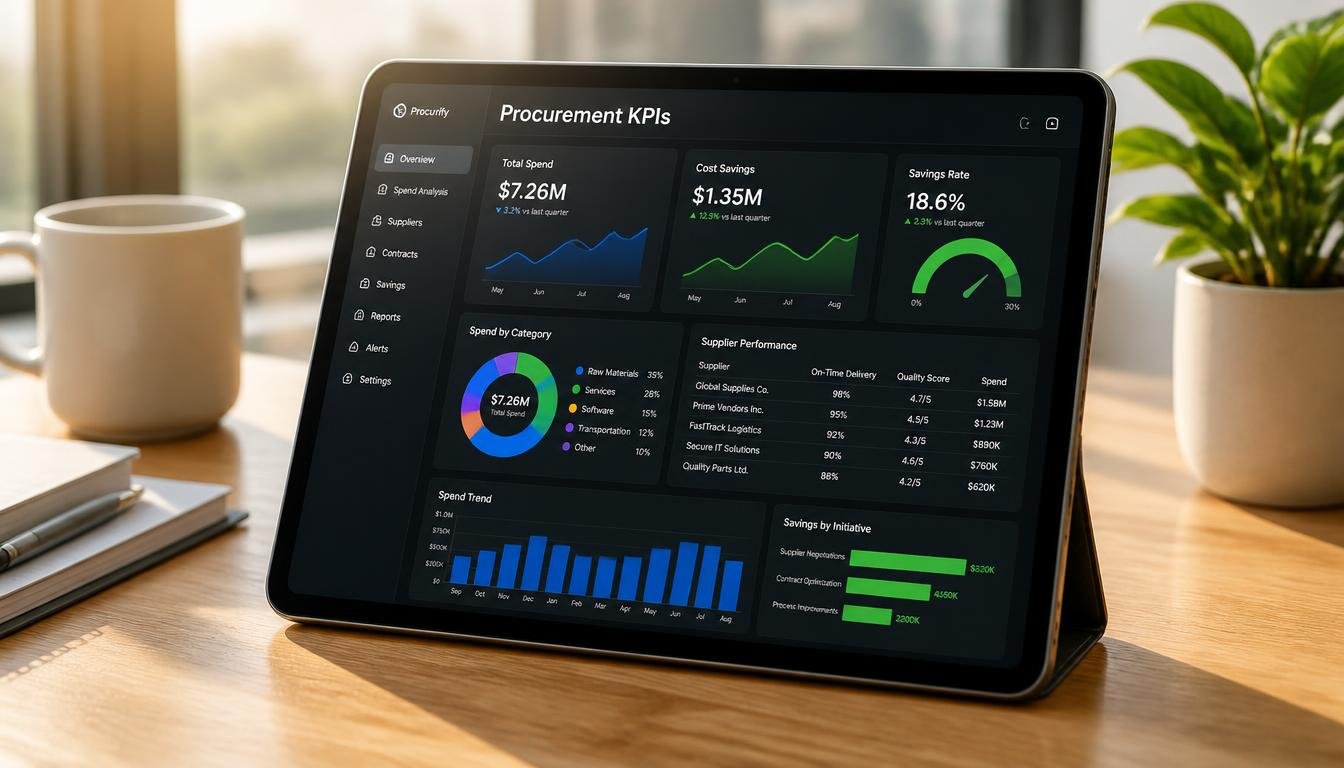
Summary: Looking to measure the true impact of your procurement department? This complete 2026 guide covers the exact Cost, Operational, Supplier, and Strategic KPIs that Finance and Operations

No products in the cart.
Printing is one of those operational costs that most Jeddah businesses never fully measure until it becomes a visible problem. A printer down during a contract deadline, toner running out on a busy morning, an IT engineer losing half a day to a paper-feed error: these are not rare events. They are the weekly reality of an unmanaged print environment.
This guide breaks down MPS vs in-house print management directly and practically what each model involves, where the real costs sit, and which approach suits your business depending on size, volume, and operational priorities. There is no vendor bias here; the goal is to give you a framework that leads to the right decision for your operation in Jeddah.
Managed Print Services is an outsourced model where a third-party provider takes full responsibility for your company’s print environment. Hardware, toner replenishment, maintenance, usage reporting, and document security are all managed under a single service agreement.
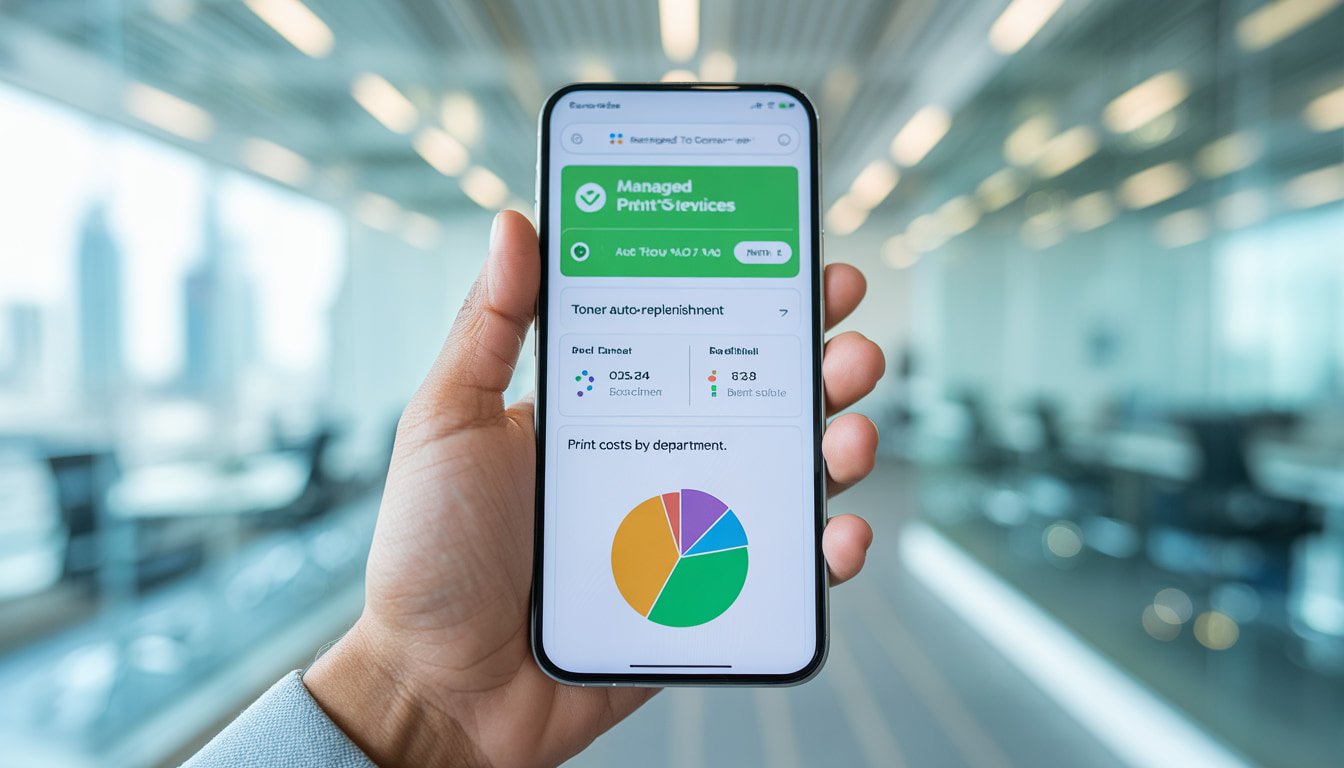
Billing typically works on a cost-per-page (CPP) basis you print, the provider monitors volume, automatically dispatches toner before you run out, sends a technician when a device needs servicing, and delivers monthly reports showing exactly where your print budget is going. Some providers also offer flat monthly rates for very predictable print environments.
The key distinction from simply buying a printer and a service contract is this: under MPS, the provider manages your entire print fleet as a system not individual devices in isolation. That system view is what generates cost savings and prevents the reactive firefighting that drains in-house teams.
Supplies Hub provides Managed Printing Services across Jeddah, Riyadh, and Dammam covering device monitoring, auto-toner replenishment, and break-fix support under a single agreement.
In-house print management means the business owns and operates its print environment entirely. You purchase hardware upfront, your IT or admin team orders toner when stock runs low, calls an engineer when something breaks, and handles configurations internally.
For very small offices a team sharing two or three printers with low monthly output this model is workable. There are no contracts to manage, costs are visible, and the setup is simple.
The problem emerges as print volumes grow and device counts increase. At that point, in-house management tends to become reactive rather than planned: toner is ordered in a panic, maintenance is scheduled after a breakdown, and no one has a clear view of which department is driving costs. Reactive printing is significantly more expensive than managed printing the numbers just rarely sit in a single visible line item.
The table below compares both models across the factors that matter most to Jeddah businesses: cost structure, maintenance load, supply reliability, scalability, and reporting capability.
| Factor | MPS — Outsourced | In-House Management |
| Upfront Cost | Zero capital — provider owns hardware | High — business buys all devices |
| Monthly Spend | Fixed CPP billing — fully predictable | Variable: toner, parts, IT hours |
| Maintenance | Provider handles all break-fix and servicing | Internal IT or on-call engineer |
| Toner & Supplies | Auto-replenished before stockout | Manual ordering — reactive |
| Scalability | Add or remove devices within contract | New purchase required each time |
| Print Security | Secure release, user auth, data logging | Depends on internal IT capability |
| Usage Reporting | Monthly dept-level cost and volume reports | Manual — rarely done consistently |
| Best For | 5+ printers, 5,000+ pages/month | 1–3 printers, under 2,000 pages/month |
The pattern in the table is consistent: MPS performs better as scale increases. When an office prints at volume across multiple devices, the predictability of CPP billing and the removal of maintenance responsibility from internal staff make MPS the lower total-cost option even when the monthly fee looks higher than a basic toner budget.
In-house management remains competitive only in genuinely small, low-volume environments where print needs are simple and stable, and where someone is actually monitoring costs consistently.
MPS is not the right model for every office. But for most mid-to-large businesses in Jeddah, it is the more efficient and cost-predictable choice. Consider MPS seriously if your situation fits one or more of the following:
Saudi businesses driving operational efficiency particularly under the cost-discipline principles of Vision 2030 benefit directly from the fixed-cost model MPS provides. Print becomes a controlled, reported line item rather than a series of unpredictable expenses.
If you are considering upgrading print hardware as part of a managed setup, browse the full printer range available across KSA — laser, inkjet, and all-in-one models from HP, Brother, Canon, Lexmark, and more.
In-house print management is not inherently the wrong choice it is a better fit for a specific type of operation. It holds up well when:
If your situation matches this profile, an in-house setup with structured toner ordering and a basic maintenance schedule is entirely manageable without an MPS contract. The key word is structured. The moment toner ordering becomes reactive or maintenance becomes ad hoc, the cost advantage over MPS disappears quietly and quickly.
This is where the MPS vs in-house print management comparison becomes most important and where most Jeddah businesses are losing budget without a clear audit trail showing where it went.
The visible costs of in-house printing are easy to track: hardware purchase, toner cartridges, paper. The hidden costs are what push the real total significantly higher:
| Emergency toner purchases at retail price When toner runs out mid-job, someone sources a replacement urgently — often paying 20–40% above what a planned bulk order would cost. This happens more frequently than most managers realise. |
| IT staff time diverted to printer issues A senior IT staff member spending two to three hours per week troubleshooting printers, resetting drivers, or chasing engineer callouts represents a significant opportunity cost — time not spent on infrastructure, security, or strategic projects. |
| Printer downtime during critical deadlines In contract-heavy industries common in Jeddah — construction, logistics, real estate, legal services — a printer going offline during a document deadline has a direct business cost. Downtime risk is rarely factored into in-house cost comparisons. |
| Toner waste from over-ordering or expiry Businesses that manage toner manually often over-stock to avoid stockouts. Cartridges that sit unused can expire or dry out — that is direct cash written off, with no system in place to prevent it. |
| No visibility into departmental usage Without usage reporting, there is no way to identify which department or workgroup is driving print costs. In-house setups almost never have this data, which means cost reduction is impossible to target systematically. |
One of the most consistent cost leaks in in-house print environments is reactive toner purchasing. If your team is still ordering toner manually, Supplies Hub stocks toner and ink for all major brands including HP, Brother, Canon, Xerox, Lexmark, and Pantum with bulk ordering and fast delivery across KSA.
If you are evaluating managed print services for your Jeddah operation, use this checklist before committing to any provider:
For businesses that need hardware without the upfront purchase cost, Supplies Hub’s printer rental service is available to businesses in Jeddah and across KSA keeping capital free while maintaining a capable print fleet.
Supplies Hub is a B2B office supplies platform serving businesses across Jeddah, Riyadh, and Dammam. For print specifically, the platform covers the full range of what an office needs hardware, consumables, paper products, and managed services through a single, consolidated procurement channel.
For procurement managers and operations teams in Jeddah, consolidating office supply vendors into one platform reduces admin time, simplifies invoicing, and gives accurate cost-per-category visibility across the business.
Explore the full range of office printers available across KSA, the scanner range for document management, or paper products and plotter rolls covering standard office through to wide-format needs.
The MPS vs in-house print management decision comes down to three variables: print volume, device count, and how much invisible cost your current setup is generating.
For small Jeddah offices with fewer than three printers and low monthly volume, in-house management is a reasonable choice provided it runs with genuine discipline around ordering and maintenance. For any office printing at scale, managing multiple devices across departments, or quietly absorbing hidden costs in IT time and reactive toner purchasing, MPS is the more efficient and cost-predictable model.
The businesses that tend to overpay on printing are not the ones who chose in-house over MPS they are the ones who made no deliberate choice at all and let the setup drift. Whether you go managed or in-house, the right answer starts with knowing your actual print volumes, your true cost per page, and who in your business is accountable for keeping both under control.
To explore managed print options or hardware available for businesses in Jeddah and across KSA, visit Supplies Hub or contact the team directly for a print environment assessment.

SEO & Content Marketing Specialist focused on building search-driven brands through strategic content, organic growth, and audience-first storytelling. Skilled in modern SEO, content strategy, and creating scalable digital experiences.
SEO & Content Marketing Specialist focused on building search-driven brands through strategic content, organic growth, and audience-first storytelling. Skilled in modern SEO, content strategy, and creating scalable digital experiences.
Related Blogs
Summary: Looking to measure the true impact of your procurement department? This complete 2026 guide covers the exact Cost, Operational, Supplier, and Strategic KPIs that Finance and Operations

The business landscape in Saudi Arabia is evolving at an unprecedented pace, largely fueled by the ambitious goals of Vision 2030. As companies scale rapidly across Riyadh, Jeddah,

Summary: “While tactical purchasing focuses on day-to-day transactions and immediate cost savings, strategic procurement builds long-term partnerships that drive overall business growth. In this guide, KSA business leaders